Author Archives: JAGRITIADMIN

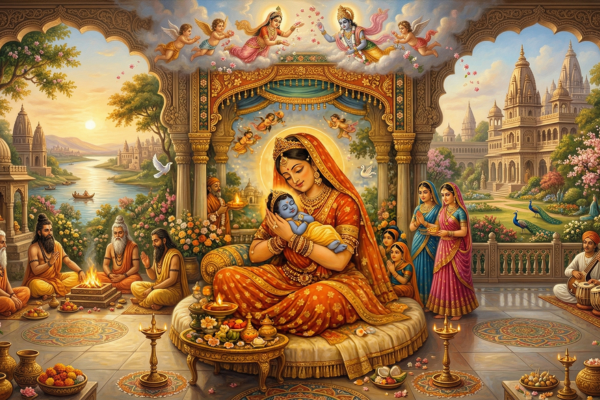
Illustration of Queen Kausalya holding infant Lord Rama during Ram Navami celebrations with sages and deities.

Shri Ram Navami: The Sacred Ascendance of the Lord of Ayodhya and the Eternal Victory of Dharma

Amidst the resplendent and glistening canvas of Bharat’s spiritual consciousness, there are few celebrations that shine with as much glory, sanctity, and joy as Shri Ram Navami. This holy day commemorates the advent, in this terrestrial world, of Maryada Purushottam Shri Ram—the ideal man, the epitome of righteousness, and the seventh divine incarnation of Lord Vishnu. Yet, this celebration is not limited to commemorating a birth; it is a plunge into the depths of Dharma, a prayer to establish a kingdom of Ram – Ramrajya, and a heavenly bridge to connect finite hearts with the Infinite Divine.
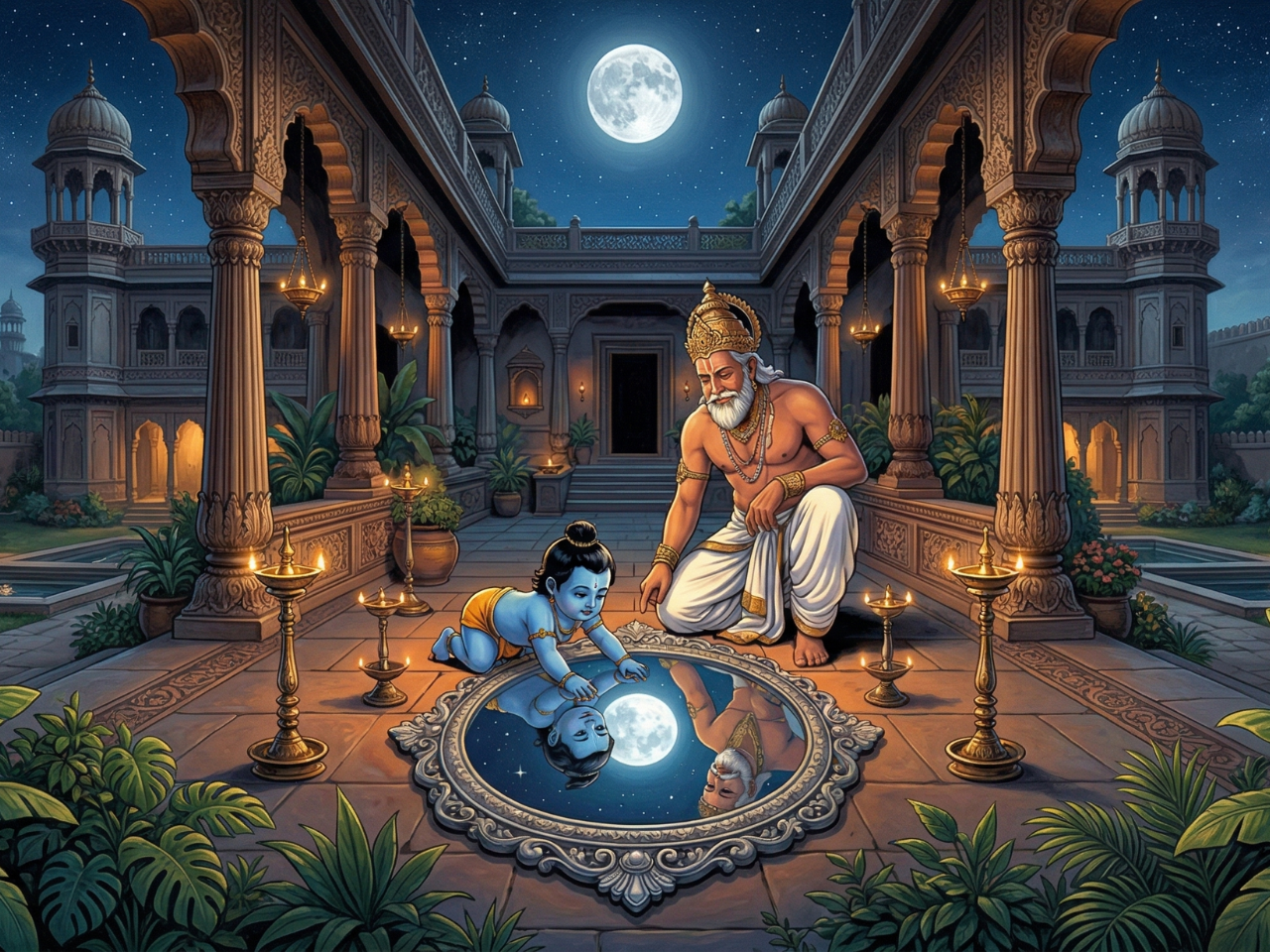
Young Lord Rama looking at the moon's reflection in a mirror with King Dasharatha in a royal palace courtyard.

Shri Ram Navami: More Than a Festival

Shri Ram Navami, commemorated on the ninth day of the bright fortnight of Chaitra in the Hindu lunisolar calendar, is not only a celebration but a holy commemoration. The term “Akshaya,” meaning eternal or imperishable, is an ideal term to define this day of worship, as the spiritual rewards acquired and blessings bestowed through worship and recollection on this day are indeed boundless. On this holy day of worship, it is said that the whole universe is filled with an invigorating divine energy, and the very air is filled with the name of Ram. 

From Ayodhya, the place of his birth, to every nook and corner of the world, millions of hearts sing “Jai Shi Ram” – a hymn of worship and adoration to this godly figure. It is a day of spiritual cleansing and rededication of oneself to the pursuit of righteousness and virtue. In an era characterised by chaos and conflict, the message of Ram Navami — of the final victory of good over evil, of light over darkness, of Dharma over Adharma — remains an unchanging and unshakeable force of hope and inspiration.

The Manifestation of Maryada Purushottam: The Divine Advent of Shri Ram

The sacred story of Shri Ram Navami is inextricably linked with the epic Ramayana, written primarily by the ancient poet Valmiki and later lovingly recounted by several saints and bards, above all by Sant Tulsidas in his magnum opus “Ramcharitmanas.”

The divine incarnation of Shri Ram, according to the Puranic tradition, was not a random event in cosmic history but a cosmic necessity. The world was in the throes of pain under the rule of King Ravana, whose Adharmic deeds and swollen ego were threatening to create a disturbance in the entire cosmos. Ravana, who had obtained a boon from Lord Brahma to render him almost invulnerable to attacks by all living beings, could be defeated by a human being — a fact which Ravana deliberately ignored in his arrogance.

Owing to the prayers of the Devas and despicable cries of Mother Earth, Lord Vishnu, in his boundless mercy, decided to take incarnation as the son of King Dasharatha and Queen Kausalya in Ayodhya. King Dasharatha, who had remained childless despite his three marriages, had performed the Putrakameshti Yajna under the guidance of Sage Rishyashringa. A divine being arose from the sacred fire and offered the king a pot of heavenly payasam, urging him to distribute it among his queens.

On the Navami Tithi of the bright half of Chaitra, when the moon entered the Punarvasu Nakshatra, Lord Shri Ram took birth as the firstborn of Queen Kausalya. Lord Bharata, Lord Lakshmana, and Lord Shatrughna were born on the following days as brothers of Lord Ram. The concurrent and harmonious birth of divine light in four forms is an extraordinary phenomenon. The sky was filled with joy, flowers rained from heaven, and the whole city of Ayodhya was filled with an aura of divine joy.

The history of Ram Navami is a testimony to the divine promise that when uprightness declines and immorality prevails, the Supreme Lord Himself takes birth on Earth to re-establish Dharma and protect the righteous.

The Rāmopākhyāna: The Presence of Rama in the Mahabharata

While the Ramayana is the most important text that reveals the life and teachings of Shri Ram, the ideals and acts of Shri Ram also find a significant echo in the grand narrative of the Mahabharata. There are many instances in the Mahabharata where the characters are seen referring to the ideals and acts of Shri Ram, revealing the significant and profound impact that He left on the moral fabric of the land even before the events leading to the Mahabharata began to unfold.

  • Discussions on Dharma: Throughout the Mahabharata, as various characters grapple with various complex moral conundrums and questions of Dharma, the name of Shri Ram is frequently cited as a reference point. Lord Krishna, in his capacity as a divine mentor, frequently cites Rama to elucidate a point about the nuances of right action and the need to adhere to duty despite adversity.
  • Reference in the Vana Parva: The section referred to as the “Rāmopākhyāna” is the Ramayana in brief, included in the Mahabharata. The sage Markandeya, with the purpose of consoling Yudhishthira during the exile of the Pandavas, narrates the tale of Rama, emphasising the tremendous pain and agony He suffered without any change of heart or deviation from the path of truth and virtue.
  • The Teachings of Bhishma: Bhishma Pitamah, while lying on his bed of arrows, in his teachings to Yudhishthira on Rajadharma, often speaks of Ramrajya and the ideal nature of Shri Ram’s rule.

Thus, the reference to Ram in the Mahabharata fulfils a dual purpose: it connects the younger epic to an older and more established code of morals, and underlines the timelessness and inter-generational applicability of the ideals represented by Maryada Purushottam.

Ram Navami Celebrations in various temples of India

Shri Ram Navami is observed with unprecedented fervour and devotion across the length and breadth of India. In the following lines, we are giving our readers a glimpse into the Ram Navami celebrations observed at some of the most prominent temples in India:
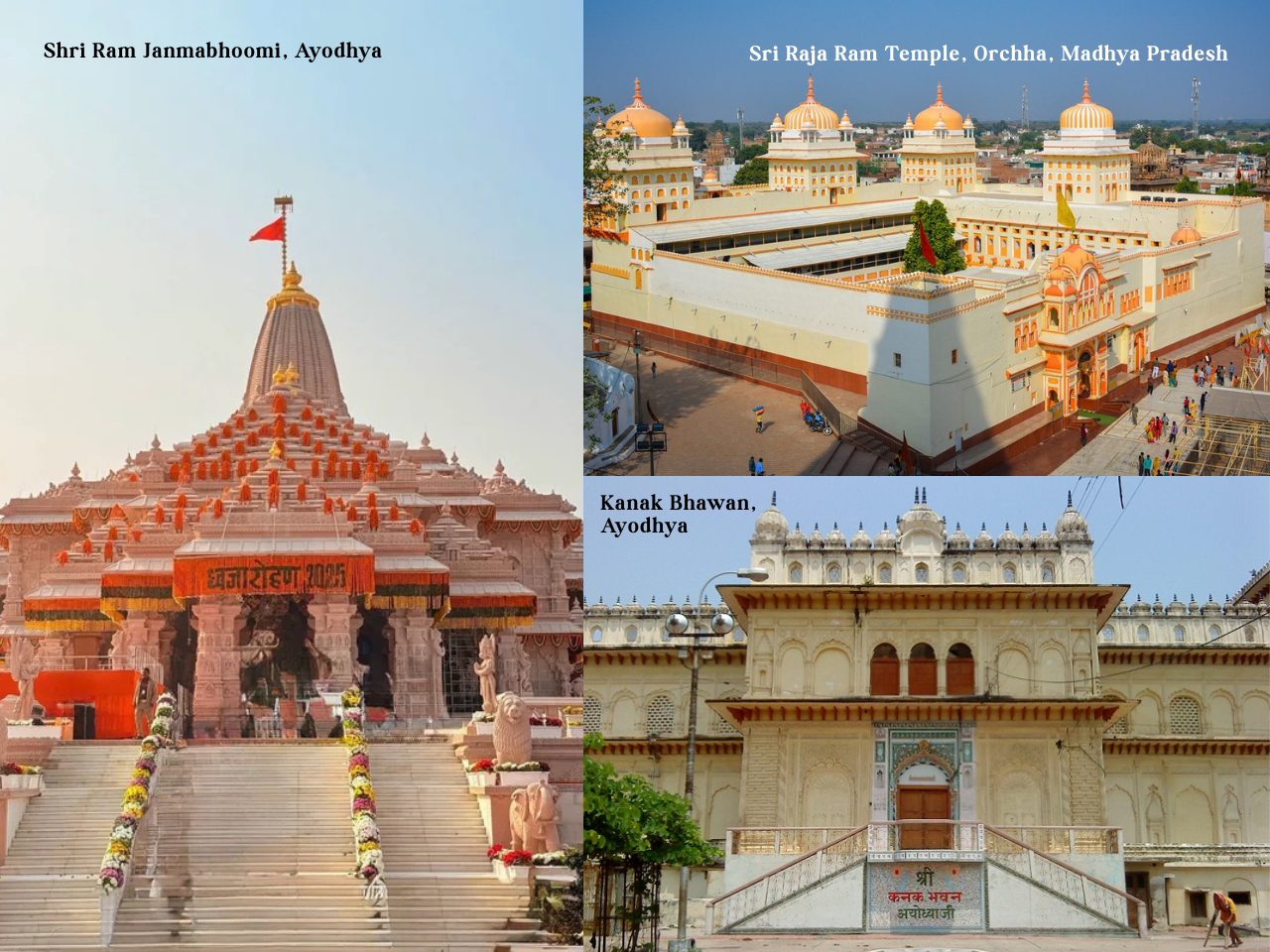
Collage of famous Rama temples: Shri Ram Janmabhoomi Ayodhya, Sri Raja Ram Orchha, and Kanak Bhawan.

  • Shri Ram Janmabhoomi and Kanak Bhawan, Ayodhya (Uttar Pradesh) – The Epicentre of Devotion: The entire city of Ayodhya is a heavenly abode as it is the sacred birthplace of Maryada Purushottam. The uniqueness of this celebration is that it is a month-long festival of Chaitra Ram Navami Mela. The celebrations begin with a holy dip at the sacred river Sarayu before dawn. The celebrations at Kanak Bhawan, which is believed to be the palace gifted to Sita by Queen Kaikeyi, are extremely personal, with Sohar songs being sung throughout the day and a grand Abhishek at exactly midday, marking the divine arrival of the Lord.
  • Sri Raja Ram Temple, Orchha, Madhya Pradesh – The King’s Guard of Honour: In Orchha, Shri Ram is not just worshipped as the Divine, but also revered as the supreme King, i.e., Raja Ram. This is the only temple in India where Lord Ram is accorded a royal Guard of Honor by the local police every day, and on Ram Navami, it is indeed a spectacular sight. The architecture of the temple is also like a royal palace, and the rituals performed in the temple are also like a royal court, befitting His status as the supreme King of the land.
  • Sri Sita Ramachandraswamy Temple, Bhadrachalam, Telangana – The Celestial Wedding: The ‘Ayodhya of the South,’ Bhadrachalam is renowned for its grand celebration of Sri Sita Rama Kalyanam, a celestial wedding ceremony that takes place exactly on Ram Navami Day. Millions congregate along the Godavari River banks to observe this grand event that is televised from Bhadrachalam. The unique tradition is that the state government presents pearls (Mutyala Talambralu) and silk garments to the divine couple as a token of devotion, a tradition that was initiated by Bhakta Ramadas and the Qutb Shahi Kings.
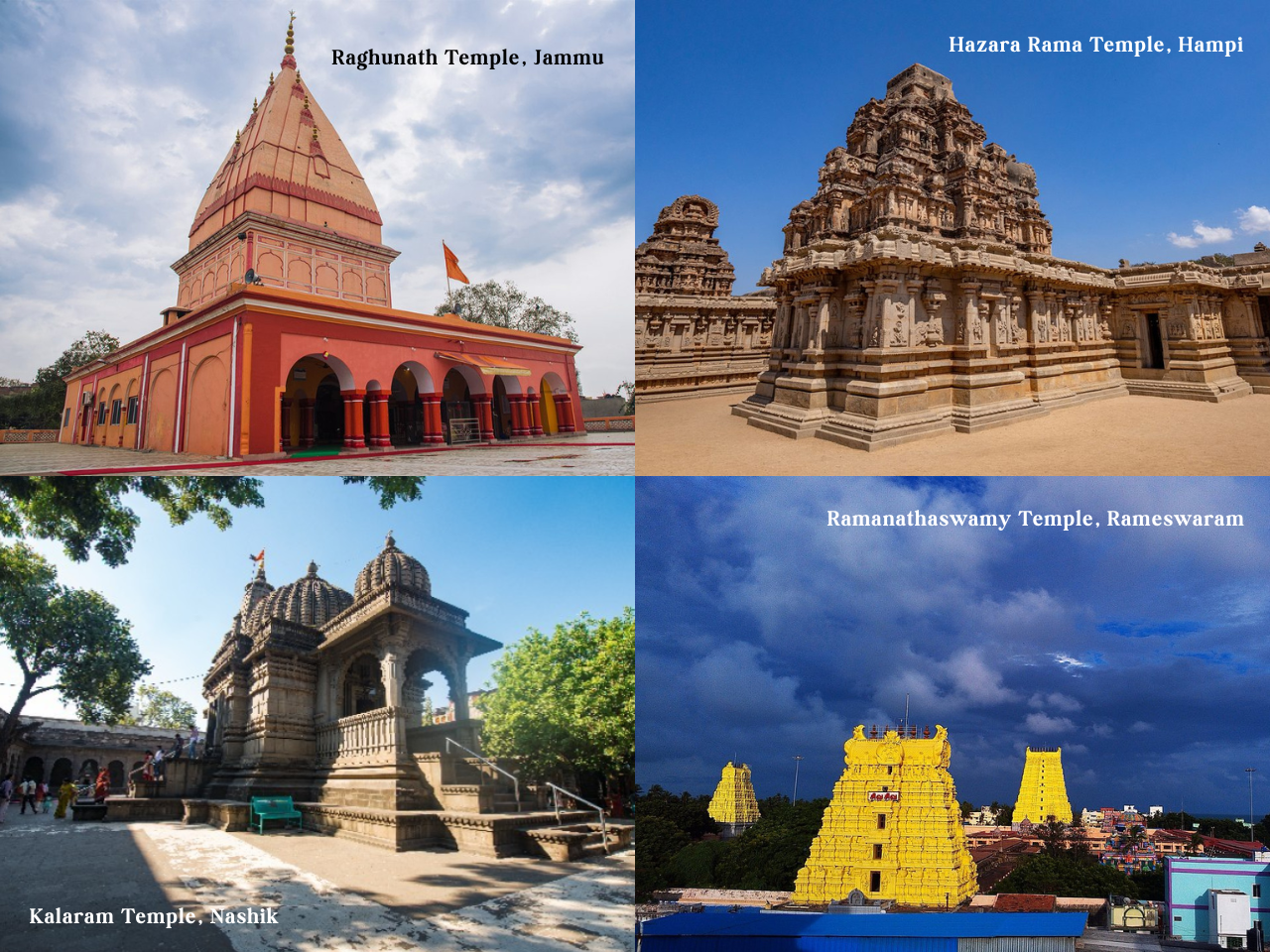
Architectural heritage of Lord Rama: Raghunath Temple Jammu, Hazara Rama Hampi, Kalaram Nashik, and Rameswaram.

  • Kalaram Temple, Nashik (Maharashtra) – The Echoes of Panchavati: Situated in the sacred region of Dandakaranya forest, where Shri Ram, Sita, and Lakshman spent a considerable portion of their exile (Panchavati), is a unique black stone (Kala) idol of the Lord. The Ram Navami celebrations are highlighted by a massive Rath Yatra procession through the old city. The ambience is permeated with the recitation of the Ram Raksha Stotra, underlining the role of Ram as a protector during His stay in the forest.
  • Ramanathaswamy Temple, Rameswaram (Tamil Nadu) – The Synthesis of Hari and Hara: Rameswaram is the sacred place where Shri Ram worshipped Lord Shiva. The special Ram Navami festival of Rameswaram is the holy bath in the 22 sacred Teerthams (temple wells), which were created by the arrows of Ram. The festival is the synthesis of Shaivite and Vaishnavite traditions and emphasises the absolute non-duality of Lord Shiva and Lord Ram.
  • Hazara Rama Temple, Hampi, Karnataka – The Kishkindha Connection: Hampi, the ancient Vijayanagara Empire, is geographically related to Kishkindha, the kingdom of the Vanaras, a race of monkeys, and of Lord Hanuman. The Ram Navami festival around the Hazara Rama and Virupaksha temples is accompanied by Carnatic music recitals and classical dance dramas depicting the Kishkindha Kanda and Sundara Kanda, narrating the story of the eternal association between Ram and His supreme bhakta, Hanuman.
  • Raghunath Temple, Jammu (Jammu & Kashmir) – The Dogra Devotion: Situated in one of the biggest temple complexes in North India, Raghunath Temple contains a million Saligrams. On Ram Navami day, the special feature of Raghunath Temple in Jammu is the grand Shobha Yatra, which highlights the martial and royal heritage of the Dogra rulers. Beautifully decorated tableaus or jhankis of scenes from Ramayana are part of the procession, along with Dogri folk songs and martial arts.
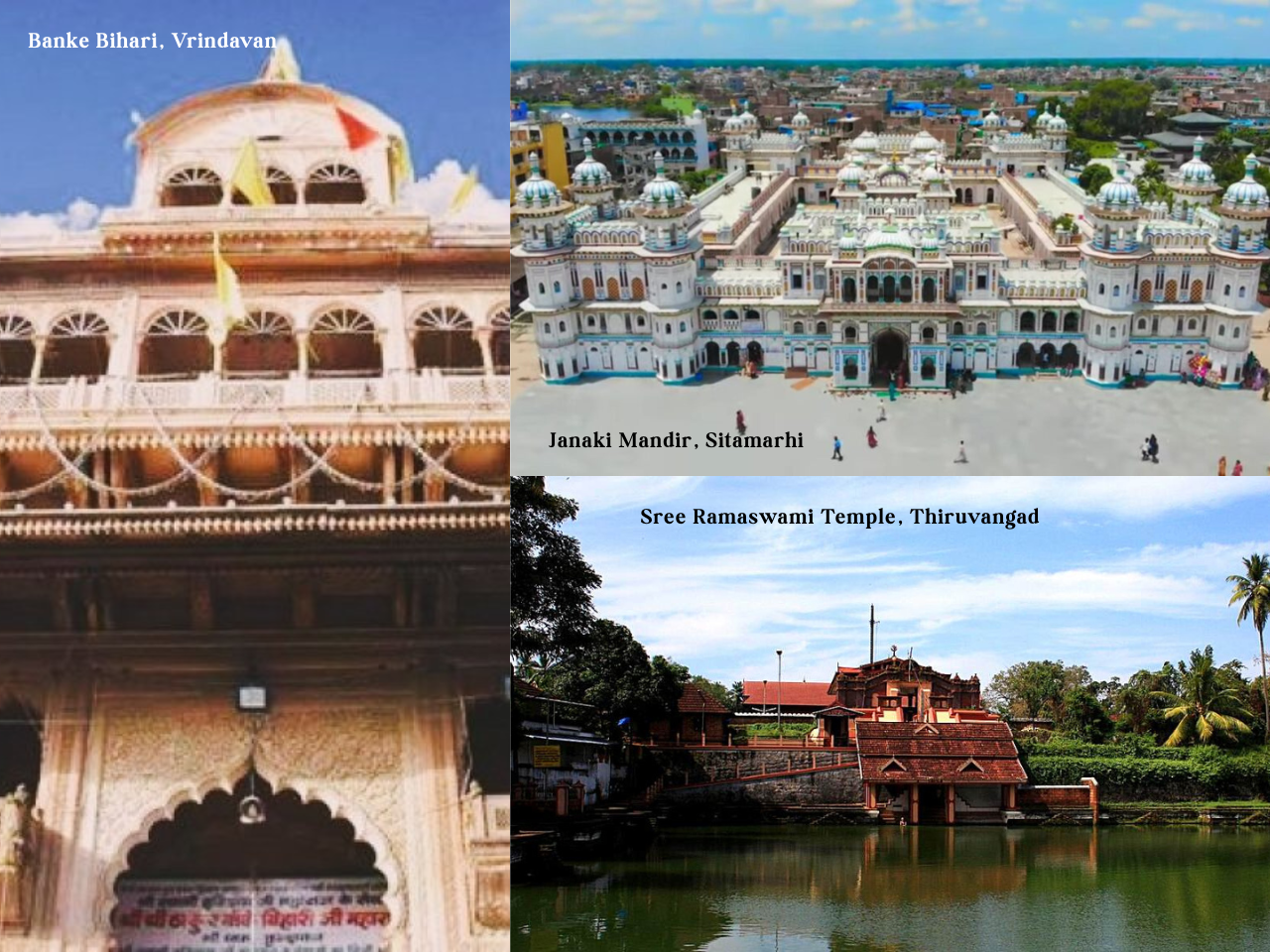
Divine sites of Ramayana: Banke Bihari Vrindavan, Janaki Mandir Sitamarhi, and Sree Ramaswami Temple Thiruvangad.

  • Sree Ramaswami Temple, Thiruvangad, Thalassery, Kerala – The Brass Pagoda’s Artistic Offering: The temple is called the ‘Brass Pagoda’ owing to its copper-sheeted roof. It is one of the most prominent Ram temples in Kerala. The speciality of this temple is that Ram Navami is celebrated along with its annual festival by presenting traditional temple arts. The festival is marked by the celebration of Chakyar Koothu and Koodiyattam, ancient Sanskrit theatrical performances that narrate the Ramayana episodes in a highly stylised form.
  • Janaki Mandir, Sitamarhi (Bihar) – The Veneration of the Divine Mother: The district of Sitamarhi is revered as the birthplace of Goddess Sita. Although it is Ram Navami, the spiritual flavour of this temple is different from others. The rituals are centred around the worship of Sita as a Divine Mother. Fairs are conducted during this time. Special Maithili Folk Music is performed by women that describes the childhood of Sita and her divine marriage with the Lord of Ayodhya.
  • Sri Krishna Balaram Mandir (ISCKON) and Banke Bihari, Vrindavan, Uttar Pradesh – The Non-Dual Ecstasy of Ram and Krishna: Ram Navami is celebrated in the very land of Krishna to assert the absolute spiritual truth that Ram and Krishna are one. The uniqueness is in the form of Akhand Harinaam Sankirtan, where the chanting is continuous. The forms of Krishna and Balaram are uniquely decorated with Ram and Lakshman’s forms, carrying bows and arrows, so that the bliss of Ayodhya is available in Vrindavan.

Jagriti Dham: A Living Embodiment of Ramrajya and Devotion

While the grand temples across Bharat resonate with massive crowds, the spirit of Shri Ram Navami finds a uniquely serene and heartfelt expression at Jagriti Dham in Kolkata. Here, the celebration transcends public ritual to become a lived experience of Ramrajya—a community anchored in peace, dignity, and Dharma. In this tranquil setting, the ‘Inner Ram’—the potential for love and compassion—is celebrated through shared stories and collective reflection, proving that in the modern landscape of assisted living in Kolkata, the eternal light of Maryada Purushottam shines brightly within the hearts of the elders. It is a day where the wisdom of the seniors meets the divine energy of the Avatar, creating an environment of harmony and spiritual belonging.

Some Unique Ram Navami Rituals

Apart from the general puja and procession, Ram Navami is observed by a series of unique rituals that enhance the already rich spiritual essence of the festival. These include:

  • Akhand Ramayan Path: One of the most popular and spiritually charged rituals of Ram Navami is the Akhand Ramayan Path. It involves the non-stop reading of the Ramcharitmanas or the Valmiki Ramayana over a 24-hour period. This is a spiritually charged ritual that involves the reading of the Ramayan by a group of people. The ritual is believed to purify the entire atmosphere and impart immense spiritual blessings on the readers as well as the listeners.
  • Rama Navami Kalyanam: Though a crucial aspect of the Bhadrachalam festival, the celestial marriage ritual of Sita and Rama is observed throughout the country, particularly in the South. This ritual is not merely a symbolic re-enactment of the marriage of the divine couple; it is a living embodiment of the spiritual truth that the soul is meant for a union with the divine.
  • Processions with Unusual Elements: There are some Shobha Yatras that carry unusual and less common elements. For example, in some parts of North India, enormous and traditional chariots with unusual intricate designs or specific animals (such as elephants or horses) adorn the Ram Navami procession. Additionally, in some parts of Odisha and Andhra Pradesh, the traditional art forms and dance dramas that are specific to that area are also an integral part of the Ram Navami procession.
  • Bhajan Sandhyas and Kirtans: Ram Navami is essentially a musical festival. Apart from the specific pujas and rituals, the evening-long, continuous Bhajan and Kirtan sessions evoke an unmistakable and omnipresent feeling of the presence of the divine. This allows the devotees to get completely absorbed in the ecstatic chanting of the Lord’s name.
  • Ratha Yatras: There are small-scale and devoted Ratha Yatras that take place in various parts of the country. A beautifully decorated ratha carries the idols of Ram, Sita, and Lakshmana, and the devotees pull the ratha with enthusiasm.
  • Panagam and Kosambari Distribution: Perhaps the most iconic and unique food ritual is the preparation and distribution of “Panagam,” a cooling and refreshing drink prepared with jaggery, lemon juice, ginger, and cardamom, and “Kosambari,” a Sattvic salad prepared with moong dal, vegetables, and grated coconut. The preparation of Panagam is said to have been taught by Lord Hanuman himself. The distribution of these food items is considered a great charity, particularly during the advent of the summer season.

Ram Navami outside India

The Divine Light of Shri Ram Navami are not limited to the territorial boundaries of India. The Hindu diaspora has found new homes wherever they have gone, but they have carried along with them this sacred flame of devotion and adapted it to their new territories while keeping it spiritually pure.

  • Nepal: In Nepal, where Hinduism is an integral part of the culture and tradition, Ram Navami is celebrated with immense grandiosity and national fervour.
    • Janakpur Celebrations: As Janakpur is the birthplace of Sita, the celebrations are centred around this place. The grand “Janaki Vivah Panchami” festival, which concludes on Ram Navami, is a grand event where processions, classical music, dance dramas, and puja ceremonies are held at the historic Janaki Mandir.
    • National Holiday: This is a national holiday in Nepal, and grand celebrations are also held across other major temples such as Pashupatinath Temple in Kathmandu.
  • Sri Lanka: With multiple locations associated with the Ramayana Trail, Sri Lanka has its own unique connection to the epic.
    • Trincomalee and Seetha Eliya: Grand celebrations are held across multiple locations, such as Trincomalee, where Ravana is said to have performed penance, and Seetha Eliya, where Sita is said to have been held captive. The focus is on narrating stories from the epic and celebrating the ultimate triumph of good over evil.
  • Mauritius, Trinidad, Guyana, Fiji, and Suriname: In these countries, where the descendants of indentured labourers have managed to preserve their Indian culture, Ram Navami is an important festival celebrated with much enthusiasm. The celebrations are carried out around local Rama Temples (Ramayan Mandlis), and activities include:
    • Community Pujas: Families come together to perform collective Pujas, Bhajans, and read from the Ram Charitmanas.
    • Cultural Programs: Grand cultural programs are organised to keep the younger generation involved in their culture through traditional music, dance dramas, and ‘Ram Leelas.’
    • Community Meals: Community meals are organised, with Sattvic food and sweets being distributed. The festival is seen as a strong manifestation of their strength and resilience as a people and a reminder of their spiritual heritage.
  • USA, UK, Canada, Australia, and New Zealand: In today’s scenario, with large Hindu populations, grand arrangements are made on the occasion.
    • Grand Pujas and Bhajans: Grand community functions are conducted in temple halls, with special abhisheks, intense akhand kirtans performed by popular bhajan groups, and inspiring lectures delivered by visiting spiritual gurus.
    • Processions and Shobha Yatras: Grand Shobha Yatras with decorated floats and chanting of “Jai Shri Ram” pass through the streets in some of these major cities, thus giving an expression of their faith and identity.

The celebration of Ram Navami outside of India therefore, stands as a symbol of the power of Dharma and a reassuring demonstration to the diaspora’s unwavering commitment to their ancient and rich spiritual heritage.

Ram Navami food

Food in Indian spirituality is not only seen as something to be consumed to obtain sustenance for the body, but is also considered to be a means to achieve purity within and without. The food prepared and consumed on Ram Navami is a direct manifestation of this profound and ancient spiritual philosophy that is embedded within Indian culture and tradition.
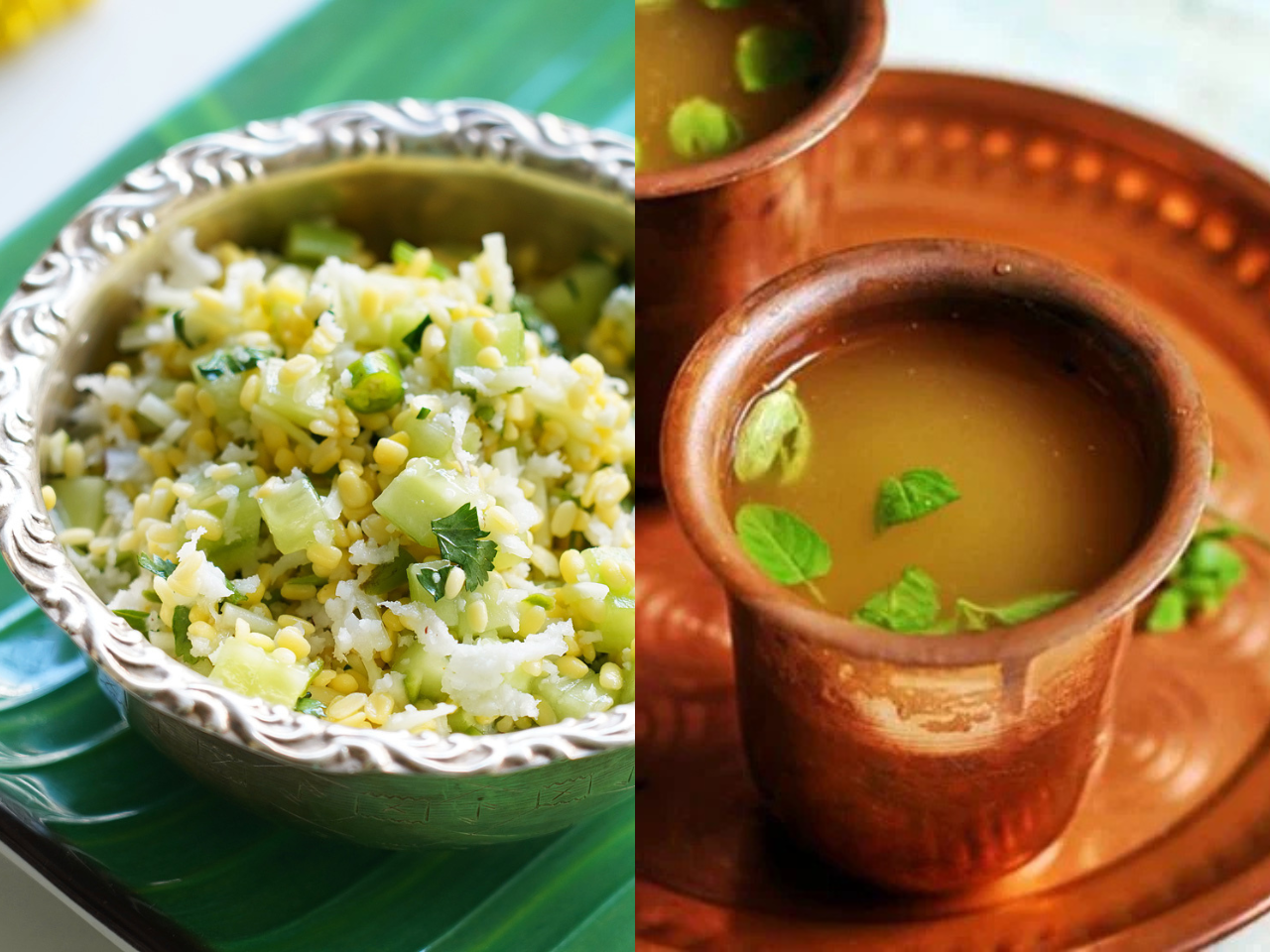
Traditional Ram Navami prasad: Kosambari (moong dal salad) and Panakam (jaggery drink) in brass and silver bowls.

  • Prasad:
  • Panagam: This cooling and refreshing beverage made from jaggery, lemon juice, ginger, and cardamom is the hallmark of Ram Navami prasad, especially in South Indian culture.
  • Kosambari: This is a Sattvic salad made from moong dal, vegetables, and coconut. This is considered a healthy and balanced prasad.
  • Vadapappu: This is a simple dish made from lentils. This dish is commonly consumed along with Panagam and Kosambari. This dish is considered to be a comfort food and is added to the prasad to give it a sense of earthy simplicity.
  • Sweet Offerings: Various types of halwas, payasams, and special sweets made from milk, nuts, and sweeteners are prepared as prasad.
  • Sattvic Nature:
    • Avoidance of Onion and Garlic: In accordance with the Sattvic nature, food items that contain onion and garlic, which have ‘Rajasic’ and ‘Tamasic’ properties, are completely avoided on this day.
    • Focus on Grains and Pulses: Food items like rice, moong dal, and all types and combinations of fruits and vegetables are included in the traditional food on this day.
  • Seasonal Food:
    • Cooling Foods: Since Ram Navami occurs in the pre-summer season, traditional food items like Panagam and Kosambari have been prepared in such a manner that they contain cooling ingredients like jaggery, lemon, and ginger, apart from ingredients like lentils and vegetables that provide balanced nutrition.
  • Spiritual Meaning:
    • Spiritual Significance: The first and foremost reason for cooking and preparing food on this day is to offer it to the god with utmost love and affection, and then consume it and share it with others in society.
    • Purification: It is believed that food that is pure and offered can not only purify the physical body but also the mind and soul.

The food on Ram Navami is therefore an amalgamation of flavours and spirituality, depicting how faith, nutrition, and spirituality are interlinked and have been an integral part of our ancient culture and tradition.

Unknown facts about Ram Navami

Though Shri Ram Navami is one of the most popular and widely celebrated festivals around the world, there are many unknown facts about it that are simply fascinating. Here’s a glimpse of the lesser-known ‘Unknown Facts’ about the festival:

  • The Midday Manifestation – Worship at the Sun’s Zenith: While the birth of Sri Krishna takes place at the stroke of midnight to commemorate the arrival of the Lunar Dynasty (Chandravanshi) Lord, the birth of Lord Ram occurs at the stroke of midday. This is because Sri Ram was born into the Solar Dynasty (Suryavansha). As per the scriptures, the Supreme Lord manifested on this day at Abhijit Muhurta (the most sacred time of the day), i.e., at midday when the Sun was at its zenith. To this day, the most important Aarti and Abhishek of Ram idols around the globe take place at exactly 12:00 PM – the symbol of the Supreme Light dispelling the darkness of ignorance.
  • The Culmination of Divine Mother Worship (Navratri): One fails to realise that Ram Navami is not an independent festival; it is the culmination of the nine-day-long festival of Chaitra Navratri or Vasant Navratri. During these nine days, the nine avatars of Goddess Durga or Shakti are worshipped with great fervour and enthusiasm. On the tenth day, Ram appears. This is the culmination of the spiritual philosophy of the universe. One needs to purify the mind and attain the birth of the inner energy (shakti) before the Supreme Consciousness (purusha or Ram) appears.
  • The “Surya Tilak” and Archaeoastronomy: It may be noted that the Indian temple architecture was inextricably linked with astronomy, a fact beautifully revived in recent times. It was found in various historical Ram temples across the country that the architecture of these temples was so carefully planned that on a particular day of Chaitra Navami at precisely noon time, the rays of the Sun would penetrate through the mandapa of the temple and fall precisely on the forehead of the deity. This “miracle,” known as “Surya Tilak,” or anointing of the deity with the Sun God itself, is now beautifully implemented in the magnificent Ram Janmabhoomi Temple in Ayodhya.
  • The Deep Ayurvedic Science of the Prasad: The food that was distributed on the day of Ram Navami—specifically in the southern parts of India—is an epitome of the ancient science of Ayurveda. The festival marks the change of season from spring to the scorching Indian summer. The Ayurvedic concoctions of Panagam (jaggery, dry ginger, cardamom, and lemon water) and Neer Mor (spiced buttermilk) were not merely sweet dishes; they were scientifically prepared, natural rehydrating agents and energy boosters. The spiritual founders of Bharat had devised the prasad to cool the body and maintain the pitta dosha of the masses under the umbrella of divine grace.
  • Reverence Beyond Sanatana Dharma: The Jain Connection: Though it is celebrated as a Hindu festival around the world, the spiritual significance of Shri Ram is revered by Jains as well. In fact, Ram is referred to as Padma in the Jain Ramayana, i.e., Trishashthi Shalaka Purusha Charitra. He is revered as the eighth incarnation of Balabhadra, an enlightened, non-violent, and elevated soul. Jains worship Him as a supreme upholder of Dharma and Ahimsa. In fact, this day is observed as a day of reverence by many traditional Jain families by reading the Jain Ramayana itself.

Timeline of celebration of Ram Navami through history

The history behind how Shri Ram Navami came to be celebrated in the way that we see today is a very interesting and intricate history, full of threads from religious texts, saintly devotion, and political and social history. While it is very difficult to pinpoint an exact timeline, we can look at some movements and periods that have shaped Shri Ram Navami in the way that we see today:

  • Ancient India (The Epics and Puranas Period): For centuries after Shri Ram, the celebration was limited to royal circles or within scholarly circles among the sages. The concept of public festivals was still in an evolutionary stage.
    • Courtly Rituals: It can be inferred from some of the early Puranic texts that some rituals, including special sacrifices and the adoration of the king, might have been conducted to seek the blessings of Rama.
    • Limited Public Scope: While the memory and history of Shri Ram were in place, the active and massive-scale celebration of Shri Ram Navami by the masses was not in place.
  • Medieval India (The Bhakti Movement): The most important period for the evolution of the festival into its modern form was marked by the widespread popularity of the Bhakti Movement.
    • The Vernacular: The chief figure of this movement was Sant Tulsidas, who lived during the 16th century. He wrote “Ramcharitmanas,” which narrates the epic Ramayana in Avadhi, a vernacular form of the Sanskrit epic. The life of Ram was now accessible to the common man.
    • Massive Public Fervour: The Bhakti Movement, led by Tulsidas and other Bhakti Saints like Ramananda and Samarth Ramdas, introduced a new tradition of continuous chanting, kirtans, and communal readings of the Ramayana. The result was a massive outpouring of fervour.
    • Grand Temples and Aartis: The tradition of grand temples and aartis, along with non-stop kirtans, became prominent during this period. The festival had now become a popular event.
  • The Mughal and British Period:
  •  Patronage vs. Adaptation: During the long period, the festival has adapted, with some patronage from the princely kingdoms and Hindu generals in the Mughal army. In some areas, the festival has been challenged socially and/or politically, leading to a greater emphasis on the inner, domestic nature of the festival and/or subtle adaptations. There are examples of conflicts, and these have shaped the specific, assertive nature of the festival in certain areas.
  • Post-Independence India:
  • Shobha Yatras: The most significant change in the festival is the widespread growth of Shobha Yatras, which have become a defining feature of the Ram Navami festival, especially in North India, since 1947. This phenomenon has been very visible and widespread from the 1980s onwards.
  • Media and Technology: Telecasting of live pujas, bhajans, and the use of social media have further increased the scope of the festival, resulting in a global family of devotees of Ram.
  • A Prominent National Festival: The festival has moved from being a regional and/or communal festival to being a national festival that is celebrated with equal fervor across the length and breadth of India.

Mantras of Ram Navami

The Indian spiritual tradition holds the power of sound in great esteem as the Supreme Reality in the form of Sound itself – Shabda Brahman. Reciting the mantras on the sacred day of Shri Ram Navami is believed to purify the mind and burn the karmic impurities while awakening the divine love within the heart of the devotee. 

  • The Taraka Mantra (The Mantra of Liberation): This is an effective and powerful rhythmic chant that was popularised by the great saint Samarth Ramdas. “Taraka” means that which helps one cross the ocean of worldly illusions – Samsara. 
    • Sanskrit: श्री राम जय राम जय जय राम॥
    • Transliteration: Shri Rama Jaya Rama Jaya Jaya Rama
    • Meaning: “Glory to Lord Rama, Victory to Lord Rama, Supreme Victory to Lord Rama.”
  • The Moola Mantra (The Root Invocation): This is the fundamental seed mantra for worshipping Shri Ram. It is simple, powerful, and excellent for meditation with a Tulsi or Rudraksha mala.
    • Sanskrit: ॐ श्री रामाय नमः॥
    • Transliteration: Om Shri Ramaya Namah
    • Meaning: “Om, I bow to the divine Lord, Shri Ram.” This is a wonderful declaration of the total surrender of our ego to the lotus feet of the Supreme.
  • Shri Ram Gayatri Mantra (For Intellect and Righteousness): Just as the Gayatri Mantra is a powerful invocation of the Sun, the Ram Gayatri is a powerful invocation of Shri Ram, the descendant of the Solar Dynasty, to guide our intellect and lead us along the path of righteousness and Dharma.
    • Sanskrit: ॐ दाशरथये विद्महे सीतावल्लभाय धीमहि, तन्नो रामः प्रचोदयात्॥
    • Transliteration: Om Dasharathaye Vidmahe, Sita Vallabhaya Dheemahi, Tanno Ramah Prachodayat.
    • Meaning: “Om, let us meditate on the glorious son of King Dasharatha; let us focus our minds on the beloved Lord of Mother Sita. May that Lord Rama inspire and illuminate our intellect.”
  • The Shiva Proclaimed Mantra (From the Vishnu Sahasranama): The mantra is a dialogue between Lord Shiva and Goddess Parvati.
    • Sanskrit: श्री राम राम रामेति रमे रामे मनोरमे । सहस्रनाम तत्तुल्यं रामनाम वरानने ॥
    • Transliteration: Shri Rama Rama Rameti, Rame Rame Manorame; Sahasranama Tattulyam, Rama Nama Varanane.
    • Meaning: Lord Shiva says: “O beautiful-faced one (Parvati), I constantly chant the holy name of Rama, Rama, Rama, and thus delight in that beautiful sound. This holy name of Shri Rama is equal to the one thousand holy names of Lord Vishnu.”
  • The Maha Mantra (The Great Chant): This mantra is referred to in the Kali Santarana Upanishad and is regarded as the most powerful chant for spiritual upliftment in the present day (Kali Yuga). It is a celebration of the non-dual essence of Hari through His avatars Krishna and Rama.
    • Sanskrit: हरे कृष्ण हरे कृष्ण कृष्ण कृष्ण हरे हरे । हरे राम हरे राम राम राम हरे हरे ॥
    • Transliteration: Hare Krishna Hare Krishna, Krishna Krishna Hare Hare; Hare Rama Hare Rama, Rama Rama Hare Hare.
    • Meaning: “O divine energy of the Lord (Hare), O all-attractive Lord (Krishna), O supreme reservoir of pleasure (Rama), please engage me in Your loving, devotional service.”
  • Mantra for Surrender and Protection (Sharanagati): This mantra is frequently chanted by devotees who seek refuge in and surrender to Lord Rama completely. 
    • Sanskrit: लोकाभिरामं रणरङ्गधीरं राजीवनेत्रं रघुवंशनाथम् । कारुण्यरूपं करुणाकरं तं श्रीरामचन्द्रं शरणं प्रपद्ये ॥
    • Transliteration: Lokabhiramam Rana Ranga Dhiram, Rajiva Netram Raghuvamsha Natham; Karunya Rupam Karunakaram Tam, Shri Ramachandram Sharanam Prapadye.
    • Meaning: “I take refuge in Shri Ramachandra, who is pleasing to the entire world, who is courageous in the battlefield, whose eyes are like lotus petals, who is the Lord of the Raghu dynasty, who is the personification of compassion, and who is the ultimate giver of mercy.”

The mantras of Ram Navami are not merely the recitation of words; they are sound vibrations that are not only powerful and vibrant but are imbued with the presence of the Lord. While reciting these mantras with utmost devotion and heart-warming feelings, we are able to bring our finite consciousness in alignment with the infinite divine light of Maryada Purushottam.

Quotes on Shri Ram

The deep and complex essence of Shri Ram, termed the Ram-Tattva, has enthralled and inspired the best spiritual minds of Bharat for ages. He may be the ultimate historical embodiment of the perfect king to some, the ultimate object of Bhakti (devotion) to others, and the ultimate essence of eternal consciousness to the mystics.

  • Swami Vivekananda (The Heroic Ideal): Swami Vivekananda considered Shri Ram the epitome of human perfection in terms of strength and morality. He inspired the youth of India to find strength in Ram’s commitment to Dharma.

“Rama—the ancient idol of the heroic ages, the embodiment of truth, of morality, the ideal son, the ideal husband, the ideal father, and above all, the ideal king. This Rama has been presented before us by the great sage Valmiki. No language can be purer, none chaster, none more beautiful, and at the same time simpler, than the language in which the great poet has depicted the life of Rama.”

  • Goswami Tulsidas (The Supreme Anchor of Devotion): For the author of Ramcharitmanas, Goswami Tulsidas, the name of Ram was much greater than the form of Ram. He believed that the chanting of the name of Ram alone would bring salvation in the Kali Yuga.

“Kalyug kewal naam adhara, sumir sumir nar utarahi para.”

(In the age of Kali, the name of the Lord is the only foundation. By remembering and chanting it, mankind crosses the vast ocean of worldly existence.)

  • Sri Aurobindo (The Evolutionary Avatar): The great mystic-philosopher Sri Aurobindo looked upon the avatars as evolutionary markers of human consciousness. He saw Shri Ram as the avatar who created the perfect mental-ethical framework for humanity.

“He [Rama] came to establish the ethical ideal in the race… not the ideal only but the actual possibility, not only the truth but the realisation. He had to show that the Sattvic mind and the ethical will can govern the human being and the human life… He is the Avatar of the Sattvic mind—mental, emotional, moral—and he fulfilled his Dharma.”

  • Sant Kabir Das (The Omnipresent, Formless Ram): Kabir Das has beautifully synthesised the concept of Saguna and Nirguna. For Kabir, Ram was not just a historical figure who ruled over Ayodhya, but the omnipresent Supreme Spirit.

“Ek Ram Dasharath ka beta, ek Ram ghat ghat mein baitha. Ek Ram ka sakal pasara, ek Ram sabhun se nyara.”

(One Ram is the son of Dasharatha; another Ram resides in every single heart. One Ram is the creator of this entire universe, and one Ram remains completely detached and beyond it all.)

  • Adi Shankaracharya (The Advaitic Bliss): The famous non-dualistic philosopher Adi Shankaracharya, in his commentary on the Vishnu Sahasranama and Ram Bhujangam, described the esoteric significance of the term ‘Ram’ as the ultimate reality in which sages experience bliss.

“Ramante yogino anante nityanande chidatmani, iti rama padenāsau param brahmābhidhīyate.”

(The Yogis revel in the Supreme Brahman, who is eternal bliss and pure consciousness. Therefore, that Supreme Brahman is called by the name “Rama”.)

  • Morari Bapu (The Contemporary Voice of Ram Katha): A world-renowned exponent of the epic narrative Ramcharitmanas, Morari Bapu has made the esoteric teachings of the epic accessible in terms of universal human values.

“Truth, Love, and Compassion (Satya, Prem, Karuna) are the three eyes of Lord Rama. Ram implies that which causes you to rejoice. You need to go to that core. When you love, you are Ram; when you are compassionate, you are Ram; when you follow your Dharma, you are Ram.”

Shri Ram Navami is not merely a holiday or a festival; it is a spiritual event of paramount importance — “a bridge between our mortal hearts and the eternal divine light of Dharma.” It is an event where every aspect of the celebration—history, Shobha Yatras, mantras, quotes of saints — every aspect of the celebration carries with itself the unique and mighty message of Maryada Purushottam — “the message of truth, compassion, and commitment to one’s duties.” 

While celebrating Shri Ram Navami, let us not restrict ourselves to a particular celebration plan or event. Let us rather open ourselves to receive the direct and unmediated divine grace. Let us, like Sudama, offer our own ‘Poha’ of devotion hesitantly. Let us, like the Pandavas, receive our own ‘Akshaya Patra’ of divine wisdom, strength of compassion, and strength of Dharma. Let us, on this day of eternal abundance, rededicate ourselves to building a truer Ramrajya of love, compassion, and Dharma in our own hearts.

For, as Morari Bapu so poignantly reminds us all, ultimately, “Ram is not just outside; He is potential. He is the potential of love that causes you to rejoice. Go to that core.” Let this Shri Ram Navami be the dynamic start to this profound journey within ourselves to reach that place that is truly Akshaya and eternal light.

Jai Shri Ram!

About Jagriti Dham

Jagriti Dham, Kolkata’s most luxurious senior citizen home and Eastern India’s first IGBC-certified Green senior living facility, was visualised as creating a centre of excellence incorporating special amenities to aid the holistic development of senior citizens. It promotes the concept of active ageing and aims to create an age-integrated society where elders can live independently while receiving the best possible care through assisted living. Unlike other old age homes, Jagriti Dham’s vision extends beyond the walls, allowing elders to have a hassle-free life in a peaceful, like-minded community.

Stay connected with our vibrant community and keep up with our latest updates by following us on Facebook, YouTube, Google My Business, LinkedIn, and Instagram.
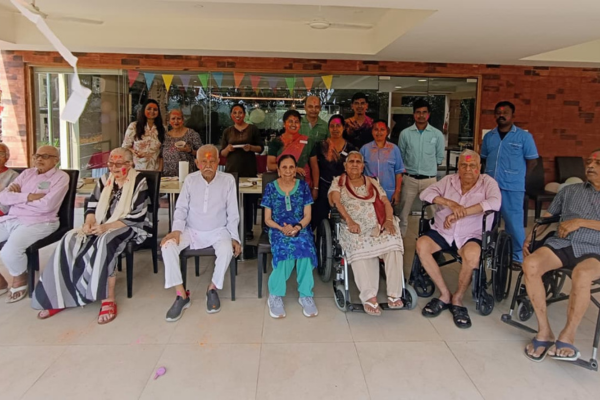
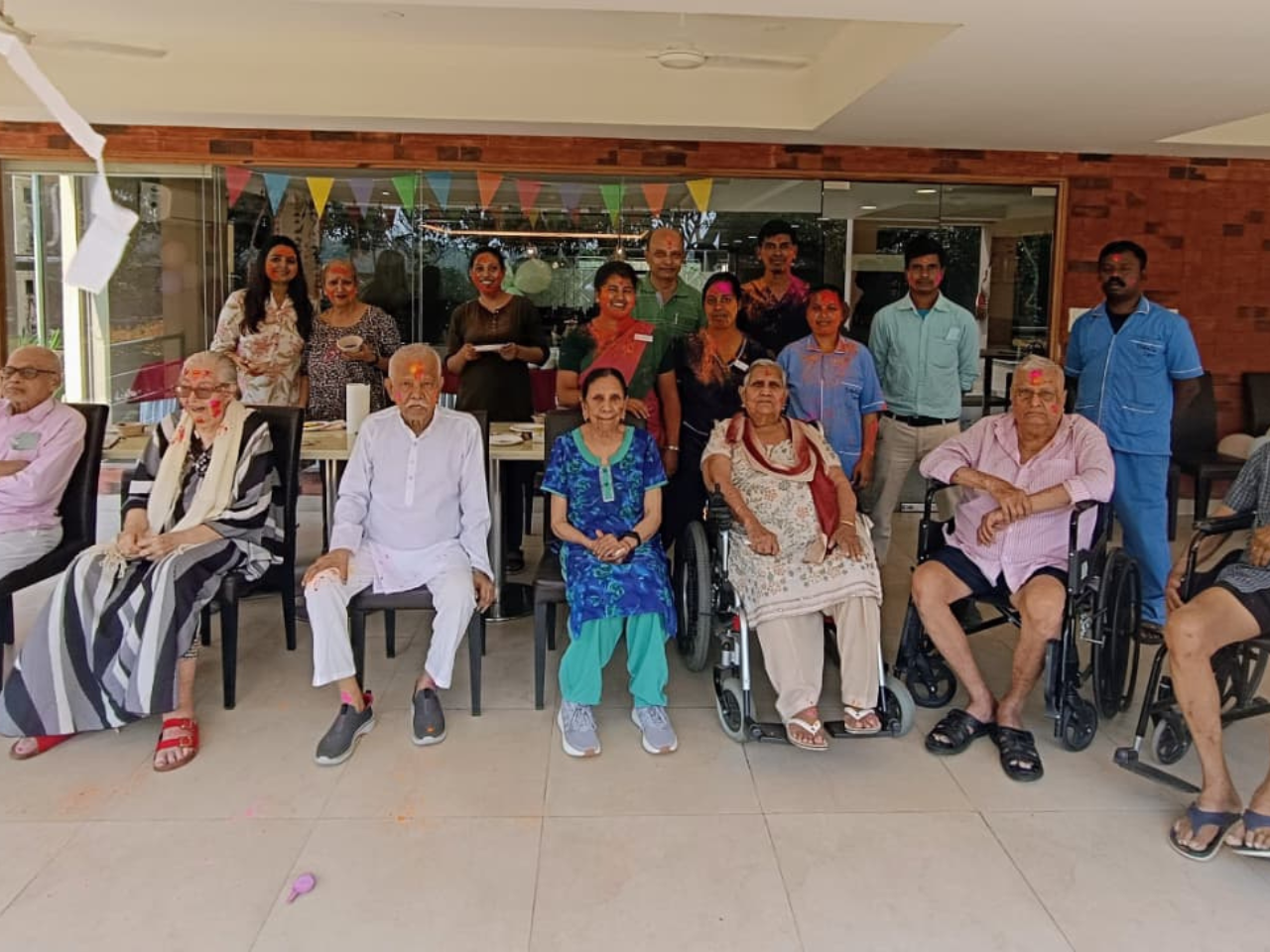
A joyful group portrait of residents and caregiving staff at Jagriti Dham gathered together like a family for Holi 2026.

Canvas of Companionship: A Vibrant Holi Extravaganza at Jagriti Dham

At Jagriti Dham, a retirement community in Kolkata, we often say, “There is no age limit to celebration!”  This year, that sentiment was proven undeniably true during our two-day Holi extravaganza—a festival defined by colours, happiness, and high-energy activities. From the sacred embers of the Holika Dahan to the creative flair of our DIY workshops, our residents left no stone unturned in their pursuit of joy.

The following is a detailed look at how we transformed these two days into an activity-filled journey driven by fun, laughter, and the spirit of “Active Ageing”.

Holika Dahan at Jagriti Dham

The Sacred Glow of Holika Dahan

The festivities commenced as night fell across our sprawling campus. The air grew cool, providing the perfect backdrop for a traditional campfire and the sacred rituals of Holika Dahan.

Bonding Over Bonfire

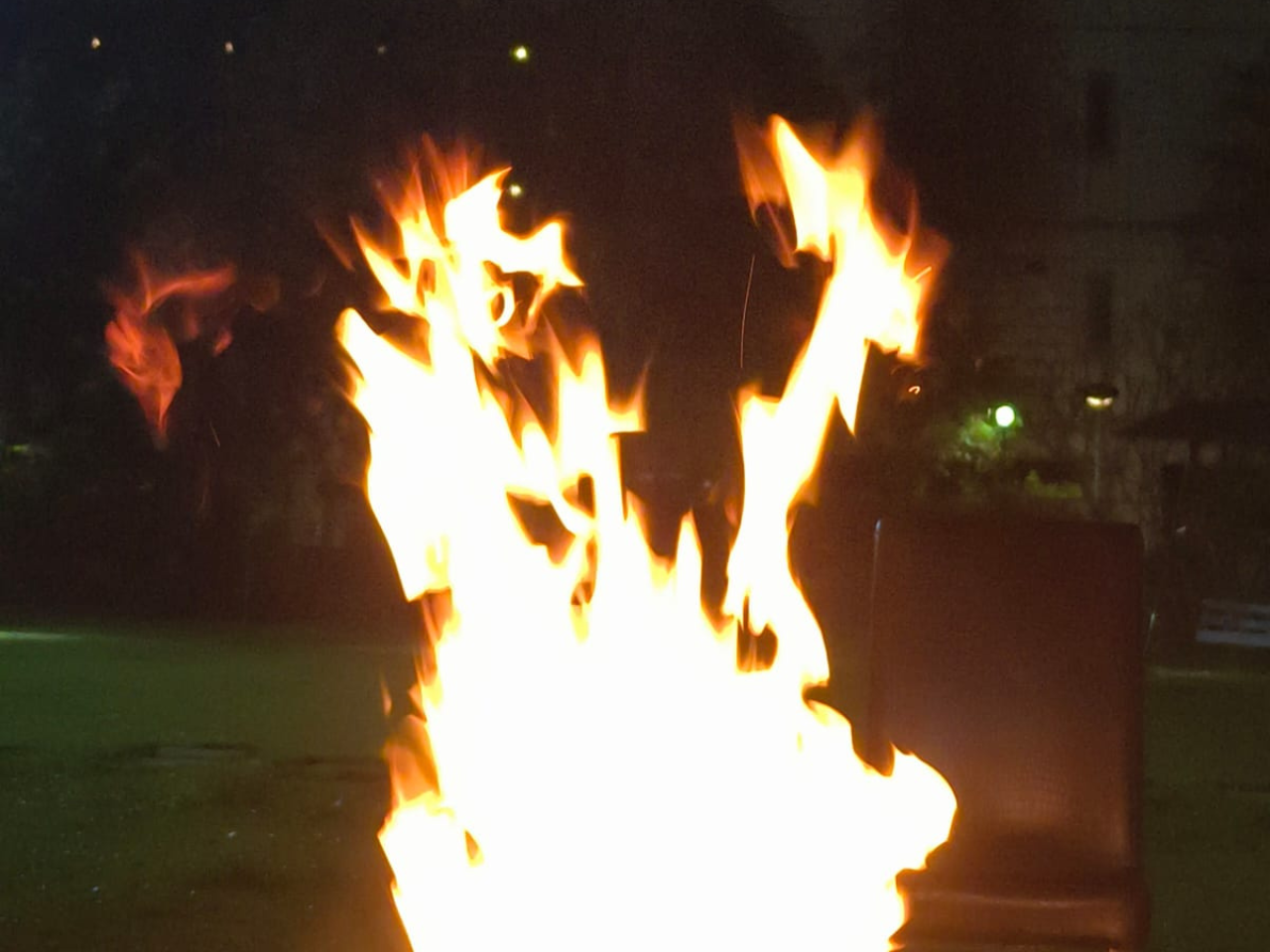
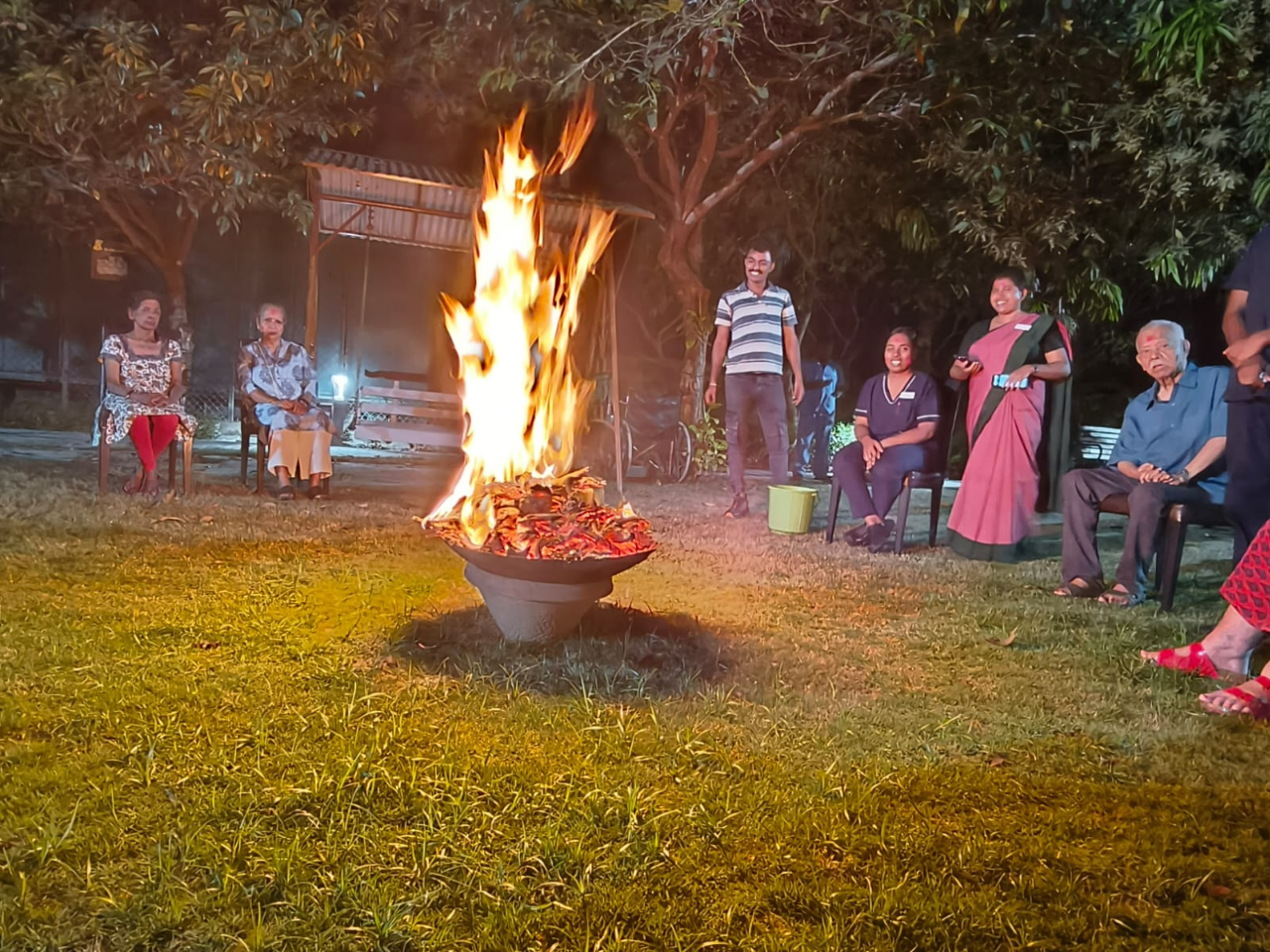
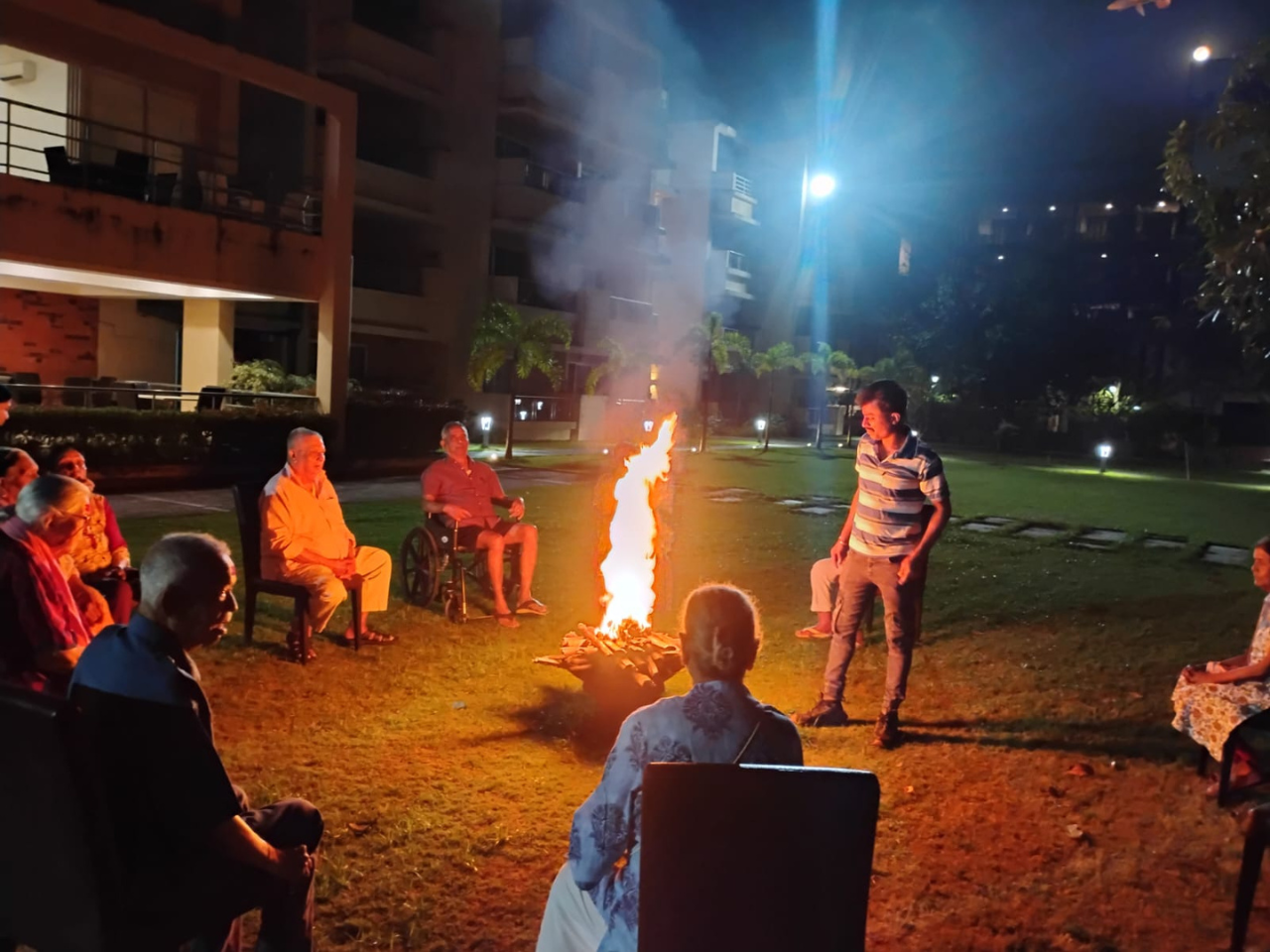
In Jagriti Dham, prayers were conducted in a big circle, allowing everyone to join in. The bonfire ceremony took place on green lawns. As the flames lit up, the structure was engulfed in flames, putting a delighted smile on each resident’s face. Everyone joined in chanting prayers aloud in unison.

Holika Dahan at Jagriti Dham

Honouring The Triumph of Good Over Evil

The Holika Dahan symbolises the burning down of evil. Just like how the effigy burned to ashes, at our retirement community, we believe that our residents face every challenge with courage and positivity, smiling through any adversity.

Sharing Stories of Childhood

One of the most heartening aspects of the evening was the intergenerational bonding. Residents shared vivid stories of the Holi celebrations from their childhoods with our team, reliving cherished memories and passing on cultural legacies.

Holika Dahan at Jagriti Dham

Inclusive Celebration for All

After all, our values speak about caring. We wanted every resident to be able to join in the celebrations. Our caregiving team went the extra mile to seat the immobile residents comfortably, where they could witness the prayers and feel the heat of the fire.

Holi Celebration 2026 at Jagriti Dham

Celebrate with Colours & Crafts

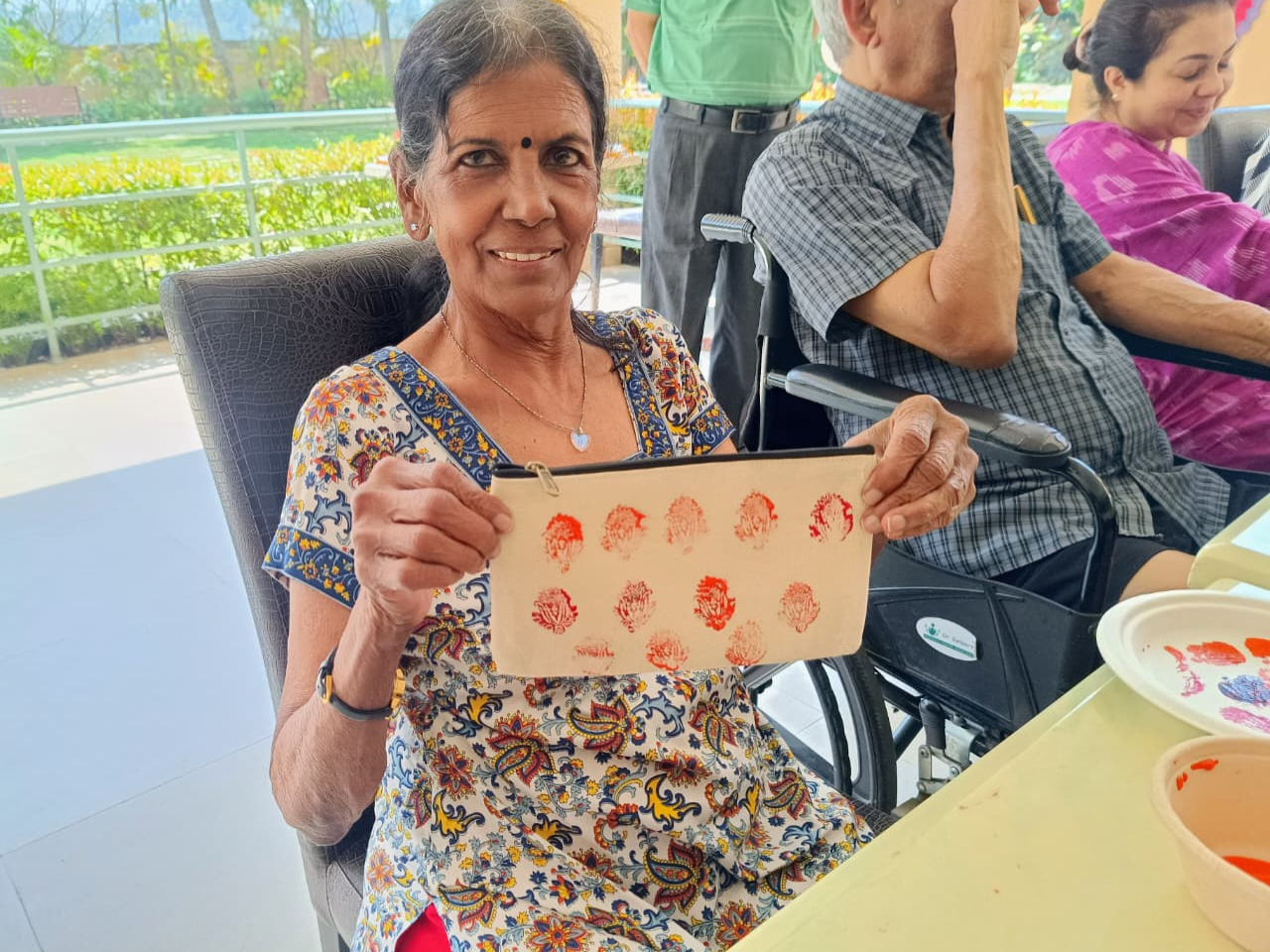
Painting the Canvas – Pouch DIY: Building an avenue for everyone to learn something new is the cornerstone of how we promote active ageing. We strongly believe that allowing our residents to pick up new skills is essential to keeping them feeling valued, engaged, and empowered.

  • A Splash of Creativity: Instead of traditional printing, residents took to painting their own canvas pouches with freehand designs and vibrant colours.
  • Mixing Hues: Adding hues using organic, natural colours like saffron, indigo, and crimson, our residents got creative.
  • The Pride of Creation: We couldn’t keep ourselves from feeling ecstatic seeing our residents flaunt their hand-painted pouches with such pride, shouting, “Look, I created it myself!”

Holi Celebration 2026 at Jagriti Dham

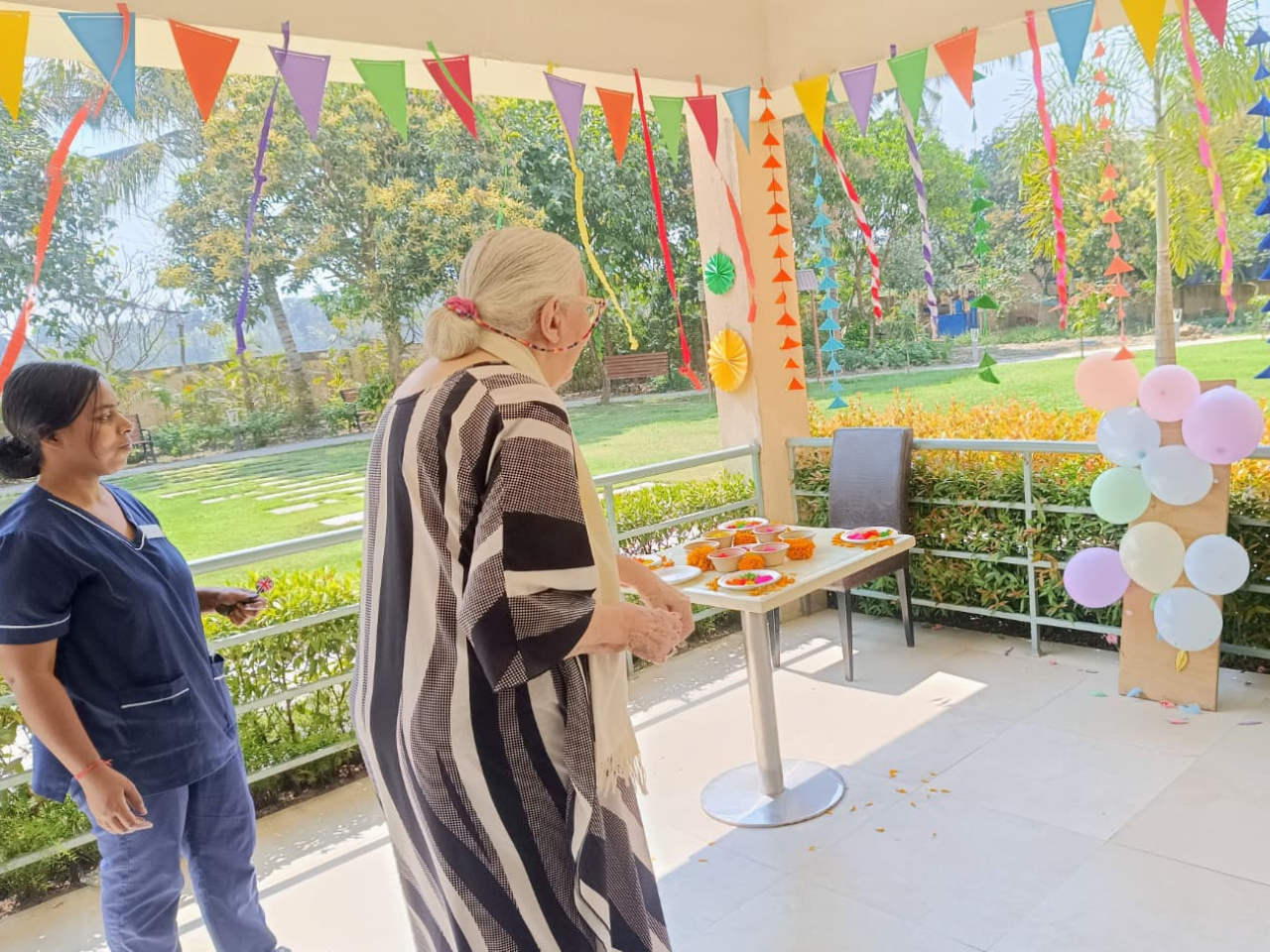
Balloon Games: Holi celebrations at Jagriti Dham are incomplete without some friendly competition. Our residents have it in them to raise the temperature – all while playing games!


Tradition of applying Abir(Herbal Gulal)

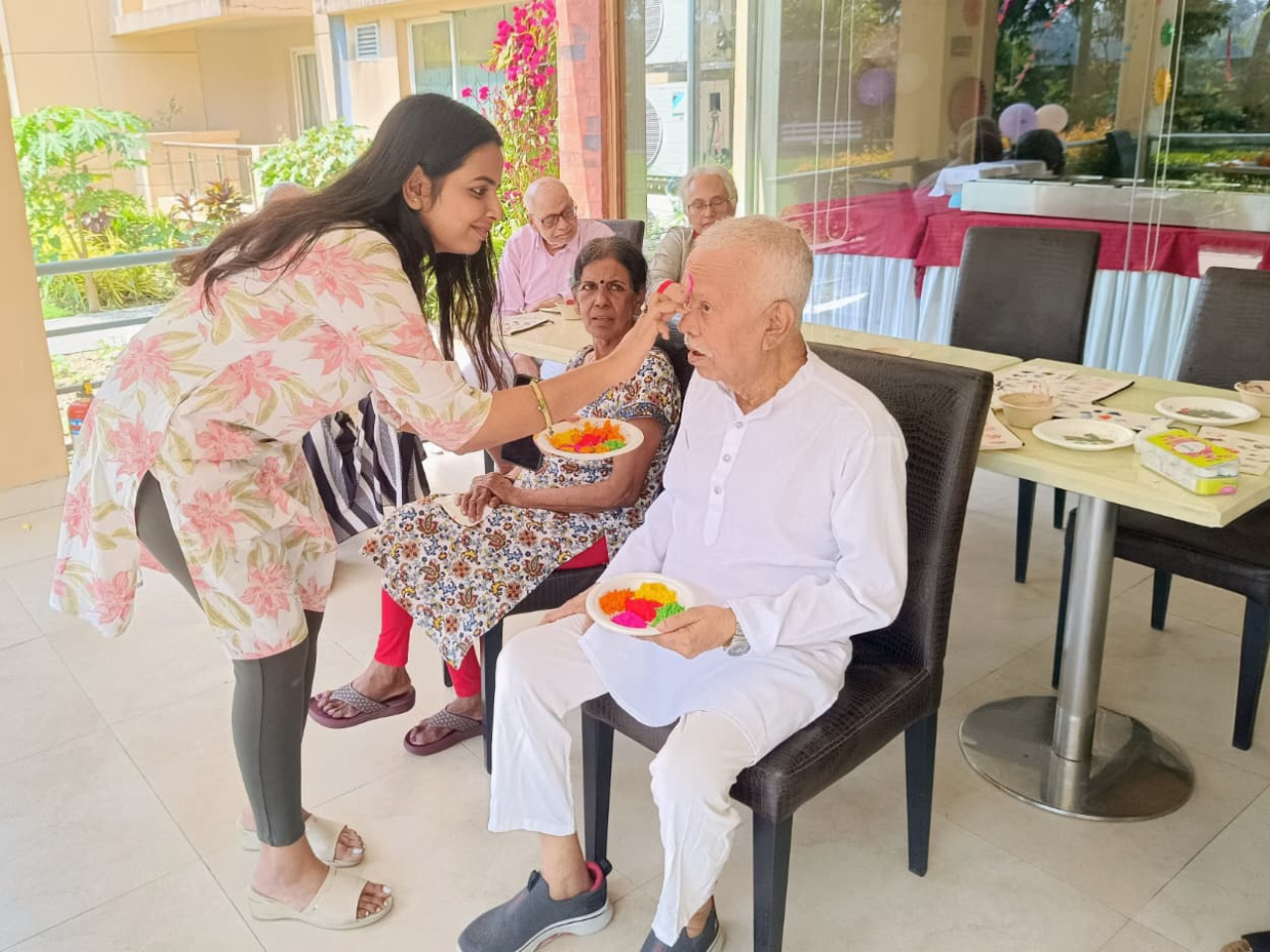
Last but not least was the application of Abir (Herbal Gulal). It was the time for colours to take over.

Pink and Yellow Smiles: Residents applied herbal gulal on each other’s cheeks and foreheads, sending warm wishes of “Happy Holi”.

One happy Parivaar: Look at our residents and caretakers enjoying themselves together. That is Jagriti Dham for you. We don’t just call ourselves a senior home; we are a Parivaar that celebrates every joyous occasion together.

Holi Celebration 2026 at Jagriti Dham

Why Celebrations Matter At Jagriti Dham

Celebrations that put smiles on these faces are an important aspect of our healthcare routine. From workshops to festivities, here’s how these celebrations immensely benefit the mental, social & emotional health of our residents:

Mental stimulation: When our senior citizens learn something new, like a DIY activity, it exercises their brain muscles.

Social interaction: Residents feel connected when they are involved in activities that keep them socially engaged with their peers & caretakers.

Emotional wellness: Games that are fun & full of laughter are the easiest way to help our residents feel happy.

Holi Celebration 2026 at Jagriti Dham

While the colours of Holi will wash away, look forward to creating memories that will LIVE on. At this “Canvas of Companionship” Celebrations at our retirement community, we will continue to inspire our elders to not just grow older, but LIVE, FEEL AND THRIVE!

Contact Jagriti Dham today to book your guided tour of our IGBC Silver-rated campus!

Stay connected with our vibrant community and keep up with our latest updates by following us on Facebook, YouTube, Google My Business, LinkedIn, and Instagram.
Old age home in Kolkata, Best senior living in Kolkata, Luxury senior living facilities, Retirement home in Kolkata, Premium old age home in West Bengal, Active ageing community Kolkata, Jagriti Dham, Events Feb 2026, Senior citizen retreat Kolkata, Luxurious old age home, BCC&I Cyber Security Event

Premium Old Age Home in Kolkata: A Month of Heritage & Innovation at Jagriti Dham

How do you measure life at India’s best premium old age home? For us at Jagriti Dham, February 2026 was a month filled with everything that sets our Kolkata retirement community apart: professionalism, spirituality, and everything in between.

The journey of discovery doesn’t pause with age; at the best retirement home in Kolkata, life only grows more vibrant. But what is our secret to maintaining a vibrant, ever-evolving lifestyle for seniors at Kolkata’s premier retirement destination? By throwing three epic events that’ll have you crossing off months on the calendar in anticipation.

Old age home in Kolkata, Best senior living in Kolkata, Luxury senior living facilities, Retirement home in Kolkata, Premium old age home in West Bengal, Active ageing community Kolkata, Jagriti Dham, Events Feb 2026, Senior citizen retreat Kolkata, Luxurious old age home, BCC&I Cyber Security Event

February 2026: A season of remarkable milestones and unforgettable moments at Jagriti Dham

Digital Resilience: Hosting the BCC&I Cyber Security Event

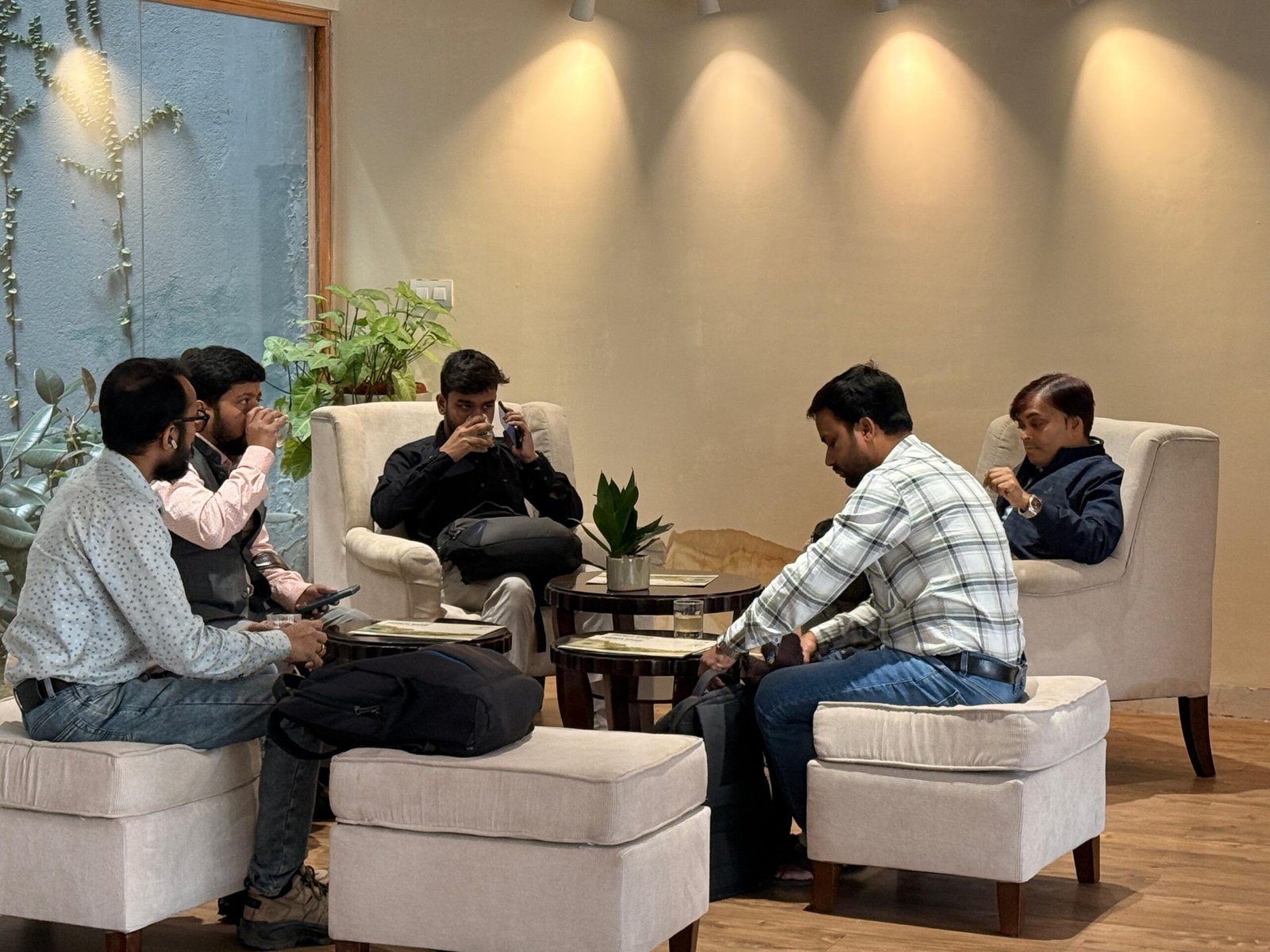
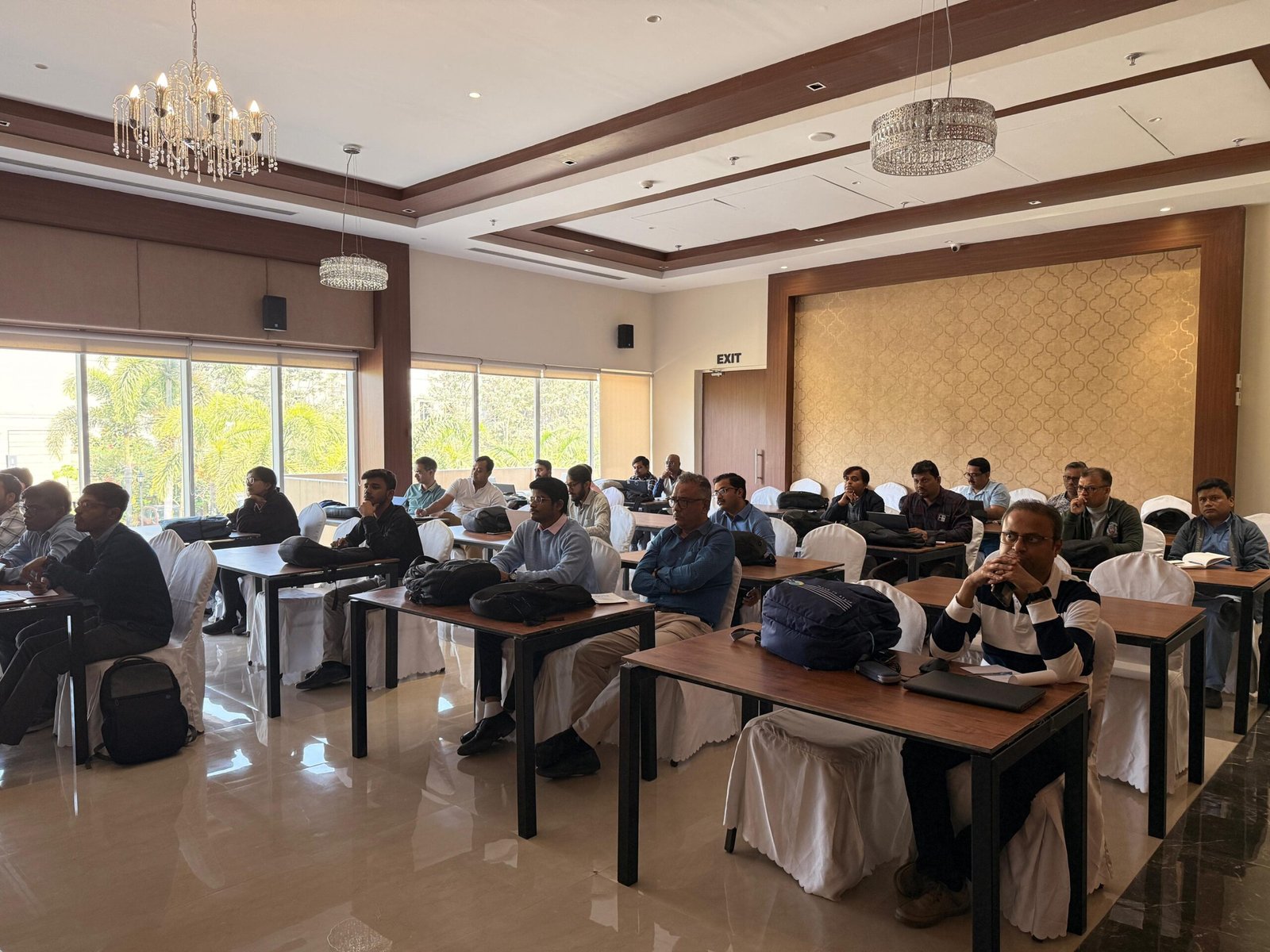
In today’s interconnected world, cybersecurity awareness is vital for all to protect their hard-earned savings and personal identity from increasingly sophisticated digital threats. By staying informed about simple prevention steps—such as never sharing OTPs over the phone, using strong, unique passwords, and verifying the identity of unknown callers before sharing information—one can confidently navigate the digital landscape and prevent common hacking attempts and scams in their day-to-day lives. We at Jagriti Dham are proud to announce ourselves as the official Venue Partner for Day 1 of Bengal Chamber of Commerce & Industry (BCC&I)‘s 5th Edition of Short Term Certificate Course on Cyber Security 2026.

Old age home in Kolkata, Best senior living in Kolkata, Luxury senior living facilities, Retirement home in Kolkata, Premium old age home in West Bengal, Active ageing community Kolkata, Jagriti Dham, Events Feb 2026, Senior citizen retreat Kolkata, Luxurious old age home, BCC&I Cyber Security Event

We were delighted to host the inaugural session of the training program that helped us support India’s efforts to create a cyber-secure environment. Professionals and leaders from the field of IT and tech enterprises attended the training program aimed at strengthening digital fortitude like never before. Our upscale retirement home lent support in driving awareness about cutting-edge topics like Artificial Intelligence-based threats, Synthetic Identity, and advanced phishing detection. At Jagriti Dham, we believe in staying at par with the times and going above and beyond. Combining forces with an elite industry organisation such as BCC&I demonstrates how an old age home in Kolkata is well-equipped to conduct seminars and workshops.

Divine Resonance: Celebrating Maha Shivratri

If you thought that February began with a bang, just you wait. Stepping right off the success of our Bengal Chamber of Commerce & Industry event, February 15th was a day when the spiritual vibrations at Jagriti Dham went from 0 to 100 in a matter of seconds.

Old age home in Kolkata, Best senior living in Kolkata, Luxury senior living facilities, Retirement home in Kolkata, Premium old age home in West Bengal, Active ageing community Kolkata, Jagriti Dham, Events Feb 2026, Senior citizen retreat Kolkata, Luxurious old age home, BCC&I Cyber Security Event

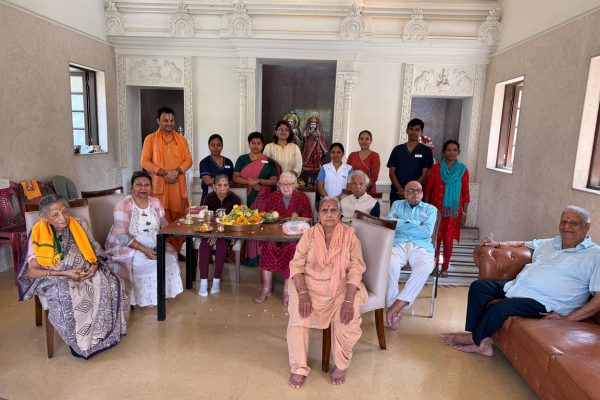
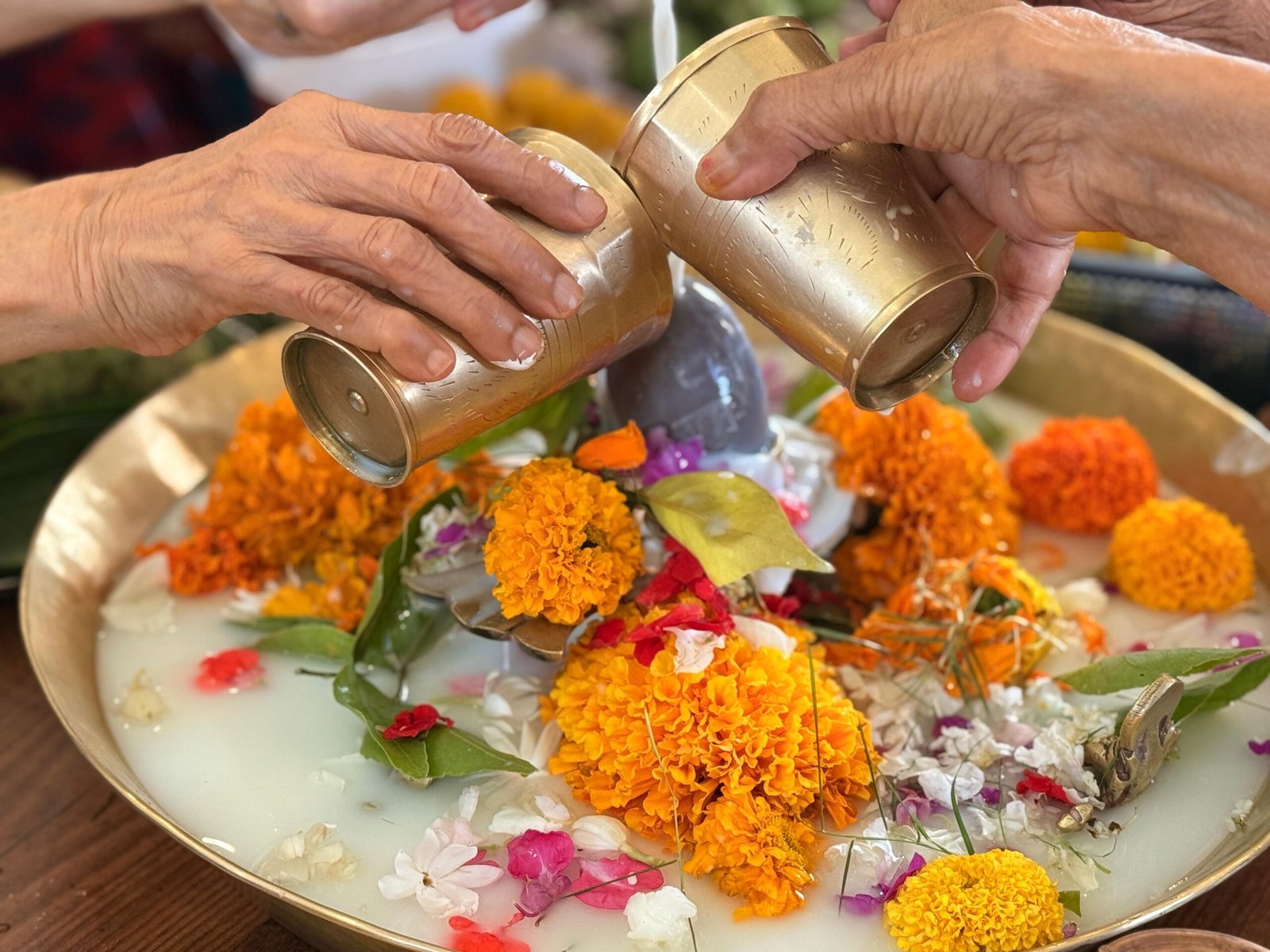
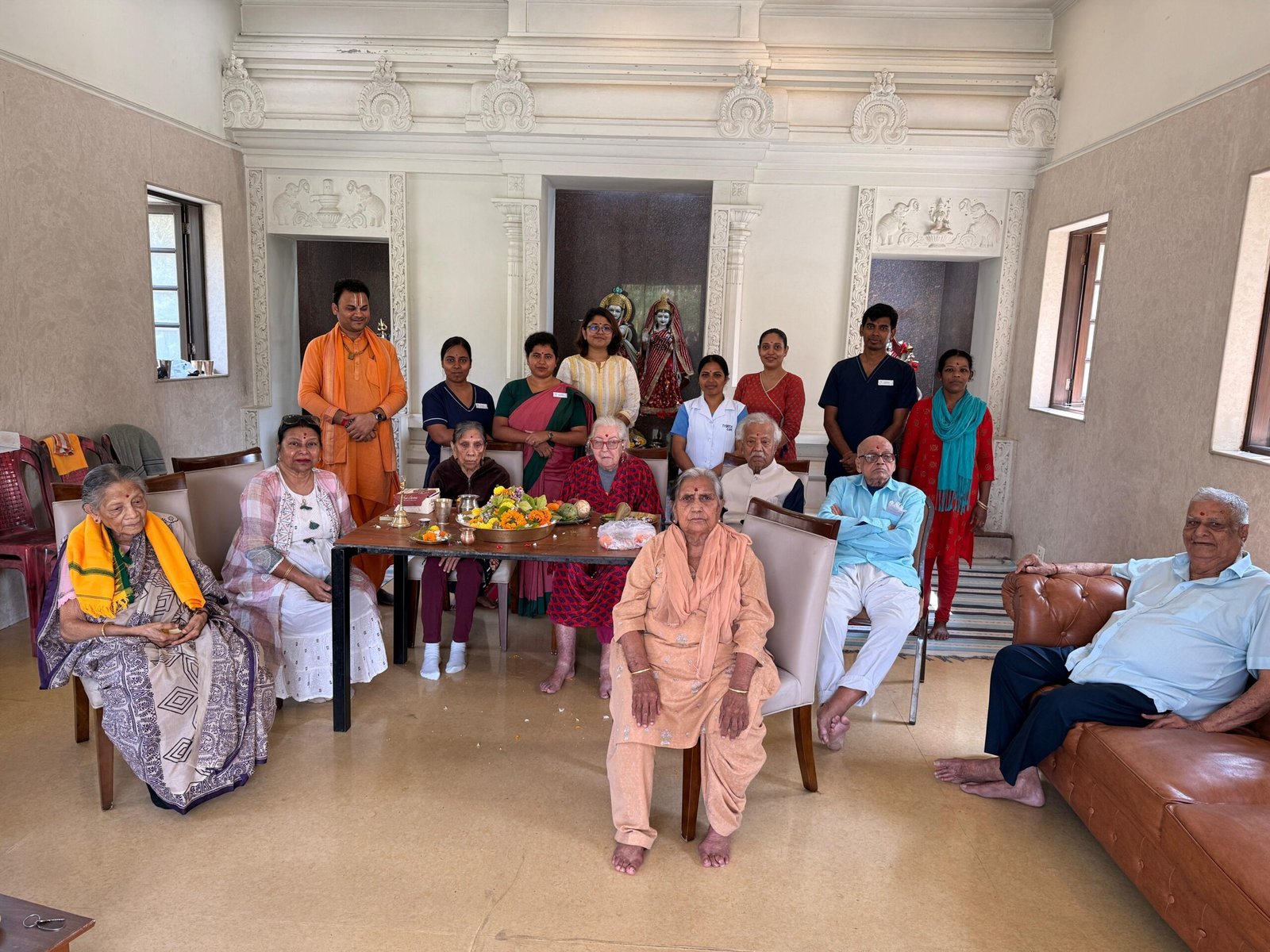
As the first light of dawn touched the campus, a sense of profound serenity enveloped the best retirement home in Kolkata. On Sunday, February 15th, our residents and guests gathered within the temple premises to embrace the auspicious vibrations of Maha Shivratri. This sacred day was dedicated to spiritual reflection and communal harmony, as the community came together to participate in traditional rituals and heartfelt prayers.

Old age home in Kolkata, Best senior living in Kolkata, Luxury senior living facilities, Retirement home in Kolkata, Premium old age home in West Bengal, Active ageing community Kolkata, Jagriti Dham, Events Feb 2026, Senior citizen retreat Kolkata, Luxurious old age home, BCC&I Cyber Security Event

Activities included the Jalabhishek of the Shiva Lingam, as well as the distribution of Prasad to ensure that all received the blessing. Our residents chanted “Om Namah Shivaya” and celebrated the joy that we find in coming together as one. Reminding us all of the peace that can be found through spirituality is what defines the best old age homes in Kolkata.

Heritage & Harmony: Pithe Puli Utsav and Kirtan

Tradition has a unique power to nourish both the soul and the community—a sentiment that beautifully came alive during our recent celebrations. At the best retirement home in Kolkata, we understand that true luxury lies in the preservation of authentic cultural experiences.

Old age home in Kolkata, Best senior living in Kolkata, Luxury senior living facilities, Retirement home in Kolkata, Premium old age home in West Bengal, Active ageing community Kolkata, Jagriti Dham, Events Feb 2026, Senior citizen retreat Kolkata, Luxurious old age home, BCC&I Cyber Security Event

The Taste of Home

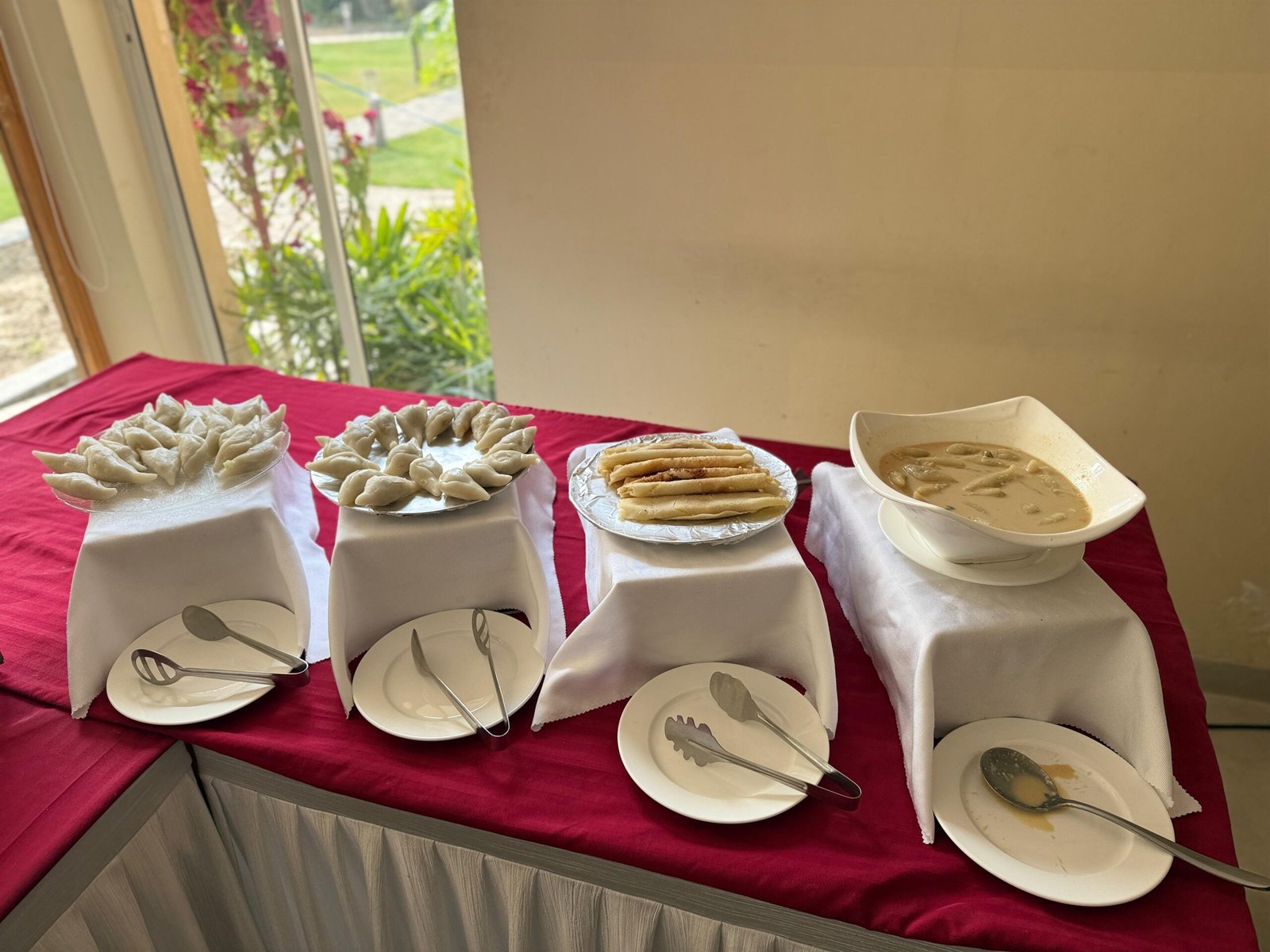
The day began with a festive breakfast in the Dining Hall, where residents gathered to honor the rich culinary heritage of Bengal. The highlight was the serving of authentic, handmade Pithe Puli. For many, the flavors evoked the nostalgic memory of “Maa-r haater pithe”. At Jagriti Dham, we take pride in the fact that our culinary offerings feel exactly like home, fostering a sense of belonging that transcends the idea of a residential facility. By focusing on traditional preparation and quality ingredients, we ensure that these seasonal delicacies are enjoyed as a communal celebration of our shared roots.

Old age home in Kolkata, Best senior living in Kolkata, Luxury senior living facilities, Retirement home in Kolkata, Premium old age home in West Bengal, Active ageing community Kolkata, Jagriti Dham, Events Feb 2026, Senior citizen retreat Kolkata, Luxurious old age home, BCC&I Cyber Security Event

A Soulful Evening 

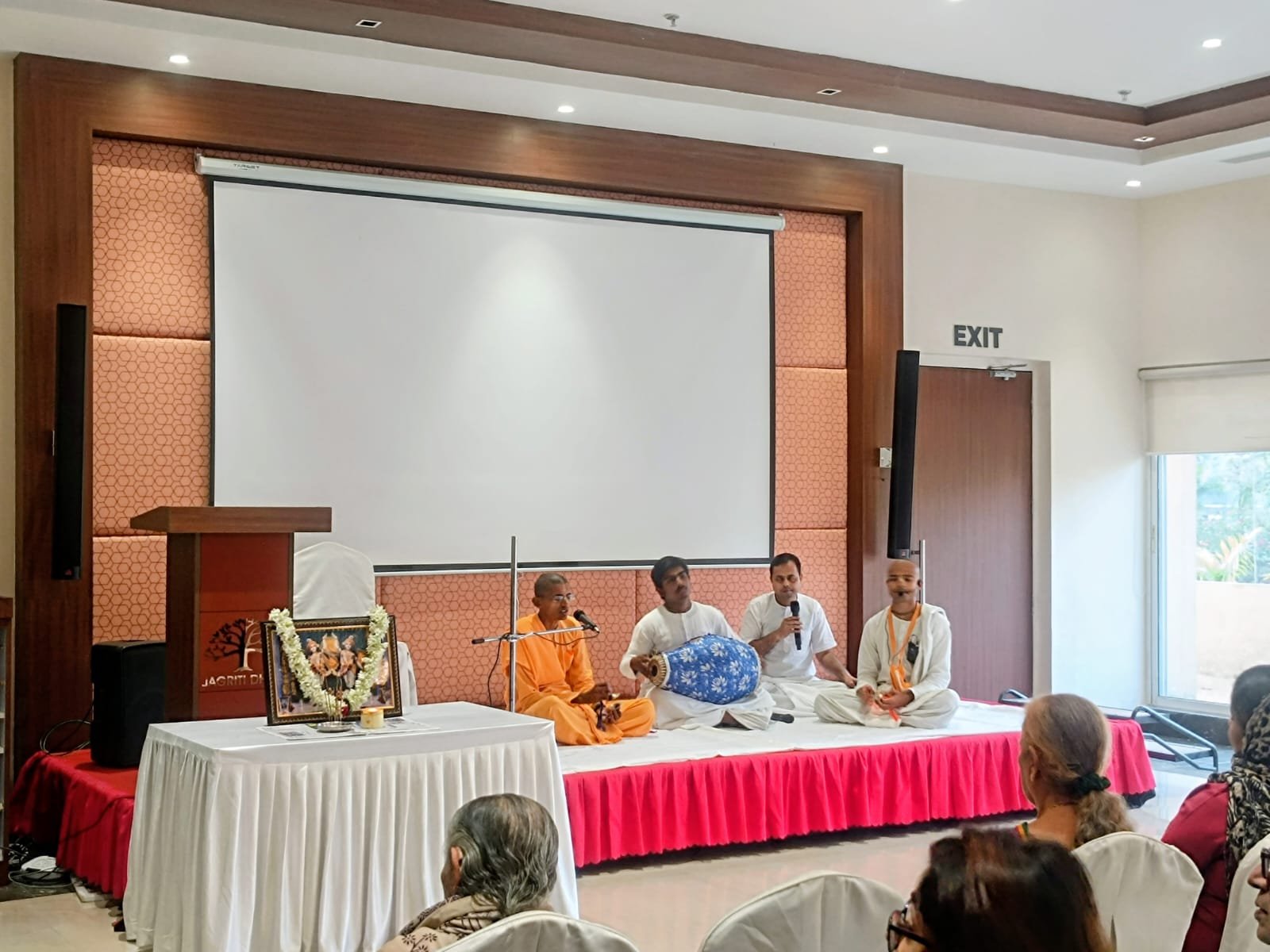
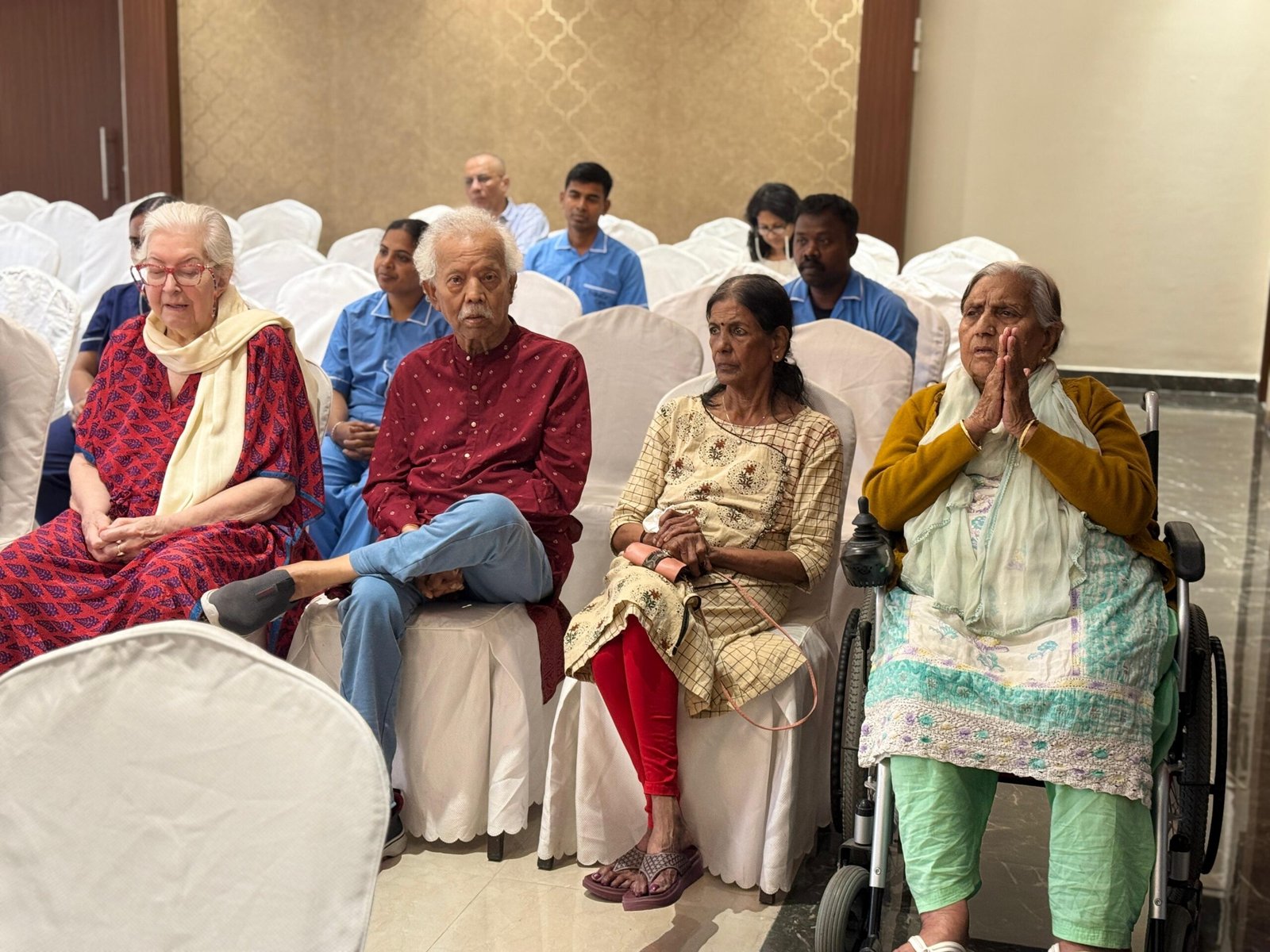
As the day transitioned into the afternoon, the community came together in the Community Hall for a transcendental Kirtan performance by ISKCON Newtown. The rhythmic chants and divine melodies filled the air, offering a profound sense of spiritual unity. From the morning’s nostalgic flavors to the evening’s meditative music, the day stood as a beautiful reflection of our cultural legacy and the warmth of community togetherness.

Old age home in Kolkata, Best senior living in Kolkata, Luxury senior living facilities, Retirement home in Kolkata, Premium old age home in West Bengal, Active ageing community Kolkata, Jagriti Dham, Events Feb 2026, Senior citizen retreat Kolkata, Luxurious old age home, BCC&I Cyber Security Event

Final Thoughts

Life at your best senior living community is never stagnant. We make sure that every senior citizen at Jagriti Dham lives life to the fullest.

When you stay at Kolkata’s best old age home for seniors, you become a part of more than just luxury infrastructure and 5-star living. From cyber security seminars to spiritual celebrations, at Jagriti Dham, we believe life should be lived with a sense of occasion, ensuring that every moment is marked by grace and purpose. Looking for a safe, senior-friendly city to live in? Move to Kolkata and stay at Jagriti Dham – Where we ensure your golden years radiate with the warmth, dignity, and luster you truly deserve.

Contact Jagriti Dham today to book your guided tour of our IGBC Silver-rated campus!

Frequently Asked Questions (FAQs)

  • How does a premium senior living facility differ from a traditional “old age home”? 

Instead of settling down in an old age home in Kolkata that offers simple accommodation and sustenance, choose Jagriti Dham for a life of dignity – and ‘Active Ageing’. Life here replicates a resort where you exchange the hassles of maintenance and management for wellness programs, cultural experiences like participating in Shiv Ratri and Pithe Puli Utsav, and so much more. Come to a family that cares for your body, mind, and soul.

  • What measures are taken to ensure the safety and holistic well-being of the residents? 

At Jagriti Dham, safety begins with senior-friendly infrastructure. Our campus is built with IGBC Silver-rated sustainable features. We have 24/7 medical assistance. But wellness is more than just physical safety. We keep your spirit stimulated as well. From the spiritual vibes of Maha Shivratri celebrated at our temple right here on campus to the sound-current of a Kirtan, we make sure life is vibrant, safe, and thoroughly enjoyable.

Stay connected with our vibrant community and keep up with our latest updates by following us on Facebook, YouTube, Google My Business, LinkedIn, and Instagram.
Organic farming at Jagriti Dham

From City Chaos to Calm: Discover a Nature-Centric Retirement Community in Kolkata

For many people, the transition to a retirement community is seen as a shift in lifestyle, but at its heart, it is a shift in environment. In today’s fast-paced urban environment, people living in West Bengal are increasingly realising that Green Living is no longer a luxury trend; it is essential for our very well-being. Access to nature is not a privilege; for senior living, it is the key to longevity. Regular contact with nature is the best medicine.

Biophilia – the innate human need to connect to nature is driving innovation in senior living. When a luxury retirement home integrates greenery into its DNA, it isn’t just for aesthetics; it is “Healing by Design”.

Organic farming at Jagriti Dham

6 Nature-Based Strategies for Senior Wellness

To truly benefit from green living, a 5-star old age home in Kolkata must go beyond a few potted plants. Here are eight actionable ways nature-focused design transforms senior citizen care:

Sensory Gardens for Cognitive Health

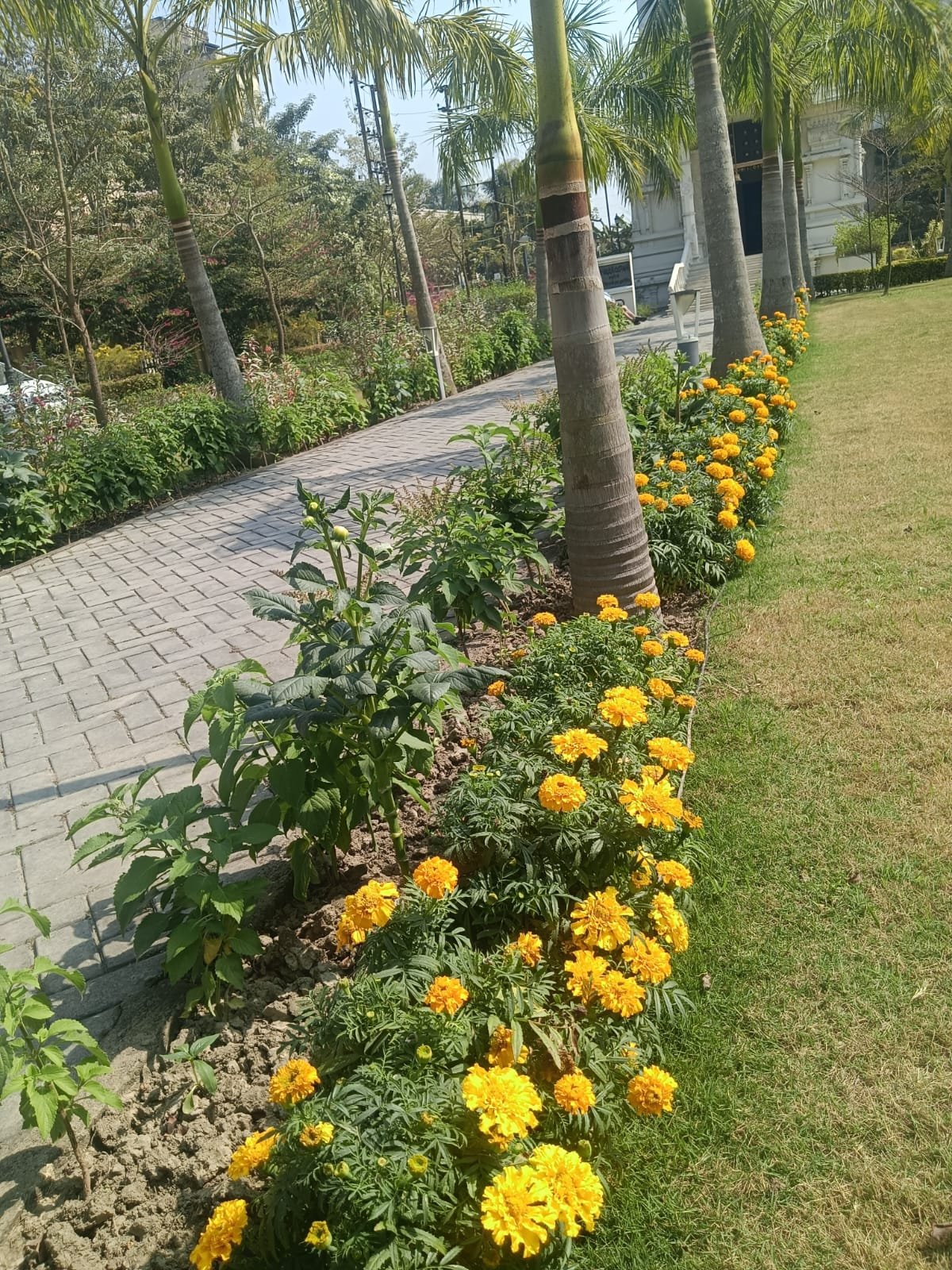
Gardens designed with herbs stimulate the senses. This is a proven strategy in old age care in Kolkata to help residents with dementia stay grounded. At Jagriti Dham, we have a wide variety of herbal plants that offer multiple health benefits, including natural insect-repellent properties and support for improved blood circulation and overall well-being. Examples include – wild basil, Aloe Vera, Amla, Lemongrass, Malabar Nut, Marigolds, and many more.

Maximising Sunlight

Natural light regulates sleep-wake cycles. High-end senior citizens’ housing prioritising large, directional windows allows daylight to flood rooms, reducing anxiety and stabilising mood. Ensure living areas have at least 90% daylight availability to regulate internal clocks.

Exercise Trails or “Walking Loops”

Walking has been proven to be the best form of exercise for elders. Cities are noisy and polluted. Top Retirement homes in India provide slip-resistant walk tracks with lush Greenery under trees. Evening walks across the green lawns, where residents enjoy quality time by observing flowers, help reduce stress and anxiety. Morning barefoot walks on the grass, which many residents say reminds them of childhood days, help improve nerve stimulation and relaxation.

Plants that Purify Indoor Air

Indoor pollution is as harmful as outdoor pollution. Oxygenating plants like Snake plant help absorb excess carbon dioxide from the air and naturally humidify the surroundings.

Meeting Places in Nature’s Lap

Spending time in nature will take the awkwardness out of any social situation. Our outdoor seating spaces are an open invitation for residents to sit back, kick up their feet, and “Adda” like back home. The presence of local and seasonal birds and squirrels within the premises regularly engages and delights residents.

Environmentally Sustainable Structures

IGBC Silver-rated structures use lead-free paints and environmentally friendly building materials that let you breathe in freshness everywhere.

The Kolkata Context: A Sanctuary at Jagriti Dham

While Kolkata is defined by its vibrant urban pulse, the spirit of retirement deserves the sanctuary of peace. Jagriti Dham stands out by offering a “Wellness Retreat” rather than a traditional facility. Located on Diamond Harbour Road within the sprawling 200-acre Merlin Greens campus, it provides a massive natural footprint that is rare in the city.

As an IGBC Silver-rated green building, Jagriti Dham ensures that residents live in a non-toxic environment. Whether it’s the morning prayers at the in-house Krishna Temple or walking through the lush 200-acre sustainable landscape, the environment at Jagriti Dham works silently to improve health every day.

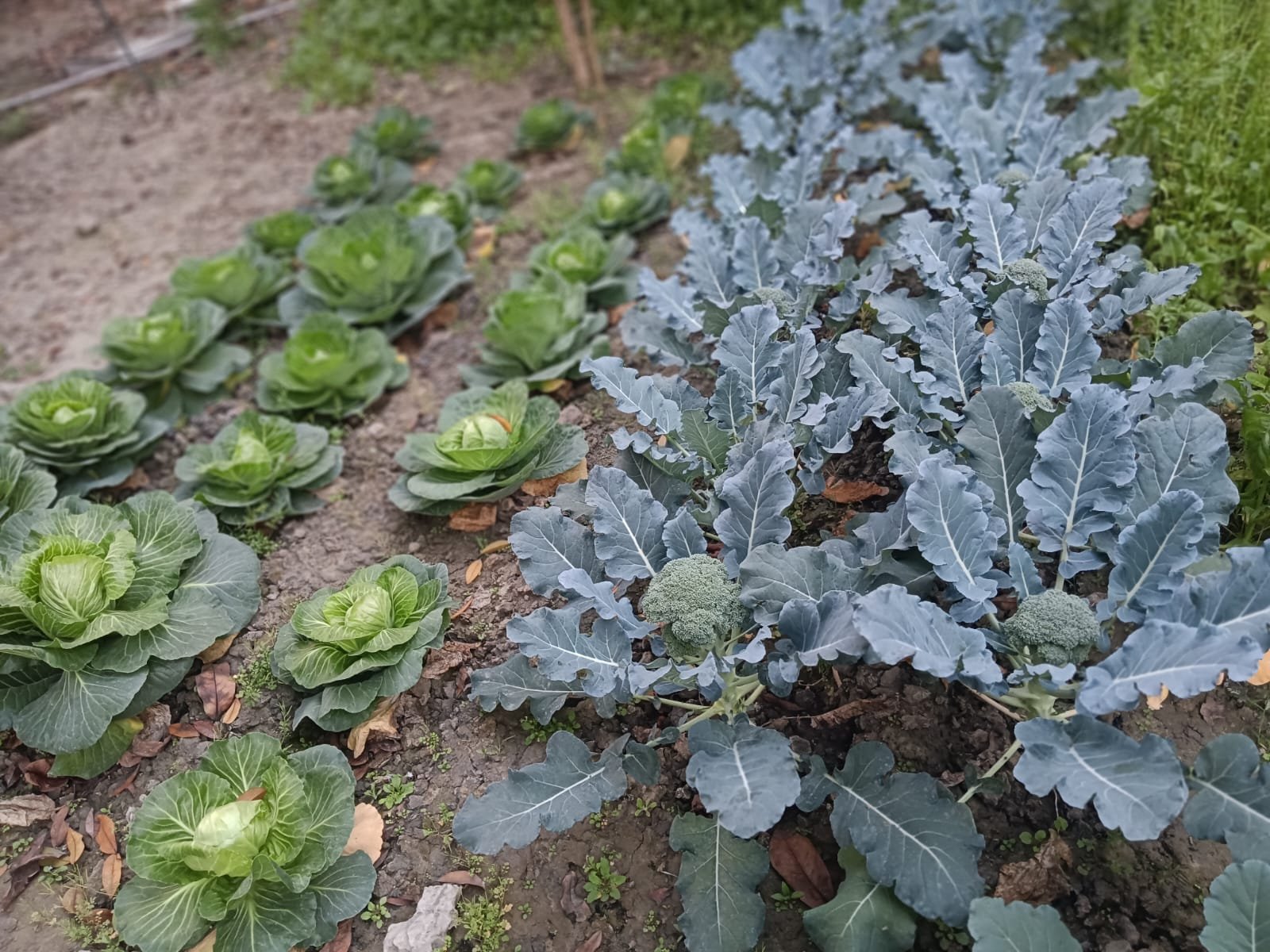
Fresh vegetables grown within the premises — such as carrots, beetroot, broccoli, cauliflower, brinjal, and others — along with fresh milk, contribute to a healthy, nutritious, homely taste in our daily meals.

Organic farming at Jagriti Dham

Frequently Asked Questions (FAQs)

  • Is an IGBC Silver-rated building better for senior health?

Yes. A Silver-rated green building ensures better indoor air quality by using low-VOC (Volatile Organic Compounds) paints and maximising natural ventilation, which significantly reduces respiratory issues common in old age care homes.

  • How large is the green area at Jagriti Dham?

Jagriti Dham is situated within the 200-acre Merlin Greens campus, providing one of the largest gated green expanses for any retirement community in Eastern India.

  • Can we “trial” the green lifestyle before moving in?

At Jagriti Dham, you can experience the 5-star hospitality and nature-filled lifestyle as a guest before making a long-term commitment.

The Next Chapter: A Breath of Fresh Air

Choosing the right retirement community is about choosing a better quality of life. At Jagriti Dham, the environment is designed to help you flourish. By opting for a home that prioritises nature, you aren’t just retiring; you are renewing.

Take the First Step Toward a Healthier Second Innings. Don’t settle for a congested city life. Experience the peace of a 200-acre sanctuary designed just for you.

Contact Jagriti Dham today to book your guided tour of our IGBC Silver-rated campus!

Stay connected with our vibrant community and keep up with our latest updates by following us on Facebook, YouTube, Google My Business, LinkedIn, and Instagram.
What is the most common mental illness in the elderly, How to improve mental health in elderly, Mental illness in the elderly symptoms, Mental health in the elderly articles, Psychological problems of old age PDF, Four common mental illnesses in the elderly, Elderly mental health issues, Geriatric mental health PDF, assisted living facilities in kolkata, senior citizen care home, elderly care, mental health for seniors, luxury old age homes in india, senior citizens housing, retirement facilities, best retirement homes, dementia care kolkata, Jagriti Dham

A Complete Guide to Mental Health Awareness and Early Signs in Seniors: Assisted Living Facilities in Kolkata

It begins with subtle changes. You visit home from Gariahat or from Singapore for a couple of weeks. You step into those wide open rooms of your parents’ South Kolkata ancestral apartment, or into your NRI parents’ lovely flat that overlooks the Hooghly River and realise something is amiss.

During your Zoom calls and weekly WhatsApp conversations, it’s so easy not to notice. Ma laughs delightfully on your screen. Baba enthusiastically updates you about his garden. Sooner or later, you tell yourself they’re doing fine. Until you visit. Until you see Ma stare blankly at the towering stack of unpaid electric bills on her dining table, which used to be immaculate. Until you hear Baba drone on about politics, only to remember that his cherished Thursday Adda—which he proudly never missed for thirty years straight—hasn’t seen him in months.

We Bengalis have a culture of Abhiman—an unspoken yet powerful pride. We don’t like to appear needy or “down in the mouth”. We brush off episodes of depression as just getting old or complain about aches and pains instead of opening up about our mental health. Because Bengalis don’t suffer silently—we live silently suffering, desperately trying to rediscover happiness in our retirement.

Moving to an assisted living facility in Kolkata isn’t about “leaving” home. It’s about going where the place still feels like home.

What is the most common mental illness in the elderly, How to improve mental health in elderly, Mental illness in the elderly symptoms, Mental health in the elderly articles, Psychological problems of old age PDF, Four common mental illnesses in the elderly, Elderly mental health issues, Geriatric mental health PDF, assisted living facilities in kolkata, senior citizen care home, elderly care, mental health for seniors, luxury old age homes in india, senior citizens housing, retirement facilities, best retirement homes, dementia care kolkata, Jagriti Dham

Listening for the Signs That Something Is Wrong

Providing the best care means tuning into that silence. They will never come out and say, “Beta, I think I’m depressed.” Instead, you’ll hear them say something like, “Ajj kal ar bhalo lage na”, which translates to “I don’t feel like doing anything these days”.

If Ma tells you she no longer has the enthusiasm to cook up her favourite recipe, or Baba hasn’t hummed his favourite Rabindra Sangeet song in weeks—that isn’t just forgetfulness. Listen closely. These are cries for help.

Seniors are the heart and soul of Kolkata. When a parent loses interest in getting out of bed in the morning, the entire family suffers. But entrusting your parents’ care to a senior home isn’t giving up on them. Not by any means. It’s loving them with your entire heart.

8 Ways to Nurture Their Mental Health

Listen to their Routine

Ask any Bengali mom, and she’ll tell you that their day runs like clockwork. When Ma suddenly forgets to do her morning puja or skips her meet-up with friends from school, take note. When the house is unusually unkempt, try not to scold them for the mess.

Encourage Conversation

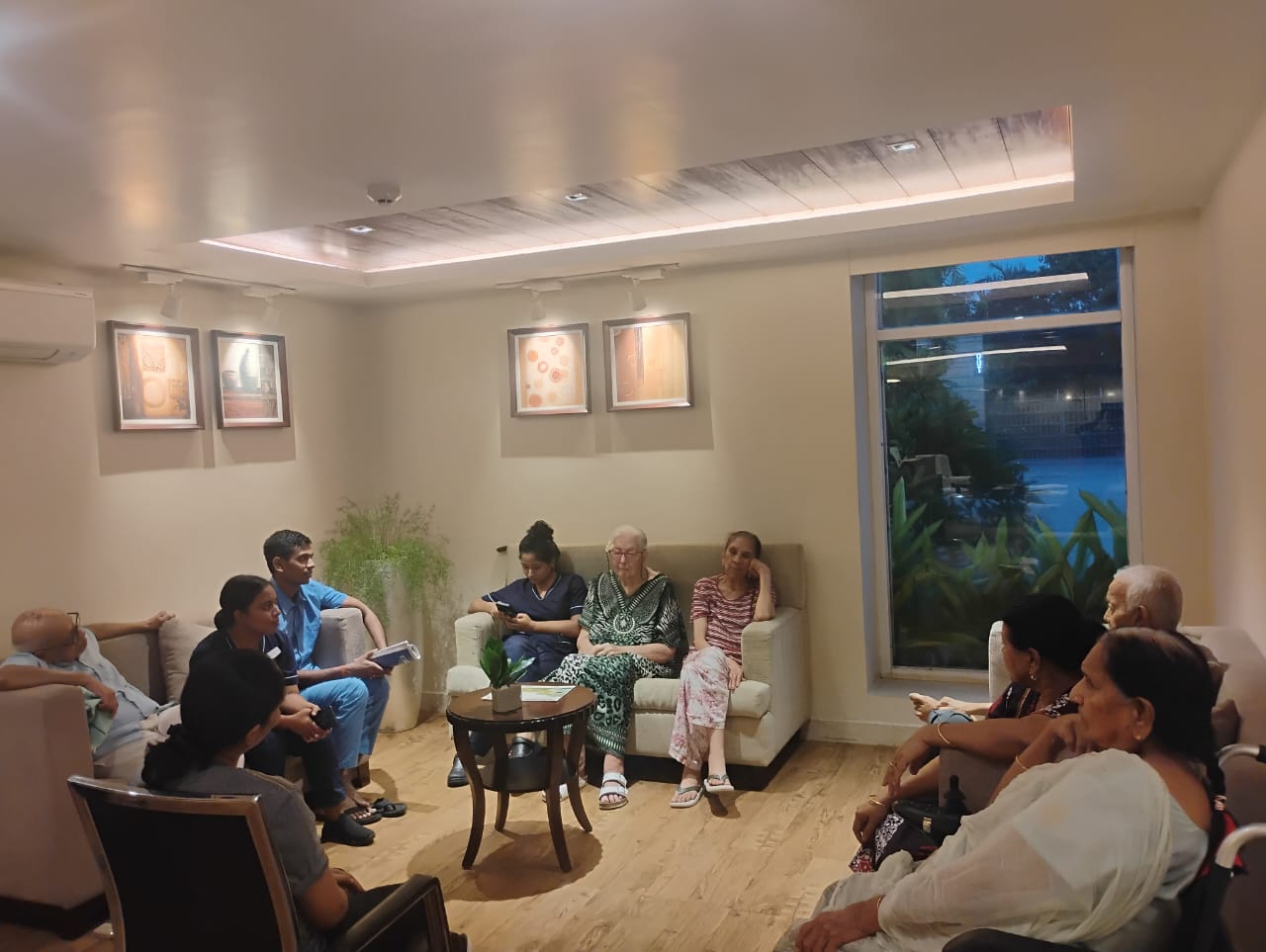
Loneliness is cancer to the spirit. Our parents need to interact with fellow Kolkattians who watch the same movies, debate over the same football team, and won’t judge you if you lick the spoon of your rasgulla. I’ve seen firsthand at Jagriti Dham how powerful conversation can be. An evening full of Adda does more for our seniors than any pharmaceutical medication.

Ease into the “M” Word

Mental health is a frightening concept for most seniors. Don’t ambush them by asking if they feel depressed. Ask them softer questions like “Mon ta ki bhari hoye ache?” (“Does your heart feel heavy?”) or “Are the days starting to feel longer than usual to you?” Combat that negative stigma with kindness and compassion.

Talk About the “Silent” Symptoms

Headaches. Stomach problems. They’re often the first indications that something deeper is wrong. Our elderly tend to push themselves until they can no longer stand the pain—physically or mentally. If you’ve tried everything to help them feel better but the medicine just doesn’t seem to be cutting it anymore, perhaps what they need is a little community around them. Senior living facilities like Jagriti Dham offer professional counsellors right on site.

Declutter Mindfully

We attach so many emotions to our “things.” When my parents decided to downsize, I didn’t say, “Oh, you should just throw that away.” We spent hours going through every cupboard and shelf, carefully honouring each item by deciding what to take with them to their new home.

Nourish their Body & Mind

In a Kolkata home, a meal is never just about nutrition—it’s an expression of love. While we ensure our menus are rich in brain-boosting walnuts, seeds, and fresh greens, we know that for a meal to truly nourish, it must also delight the palate. Our dieticians at Jagriti Dham curate menus that are as appetising as they are healthy, ensuring our seniors look forward to every bite.

Stay Sharp with “Second Innings” Activities

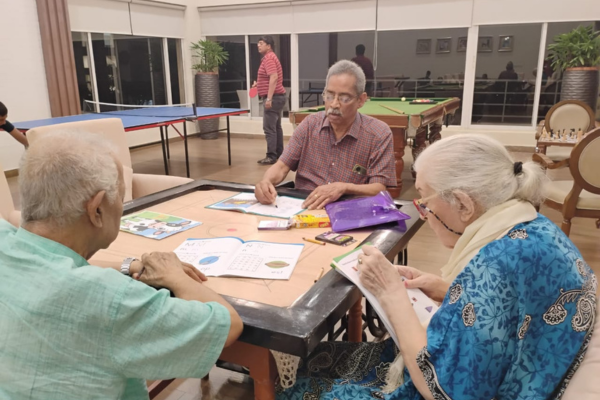
Seniors have more free time, which means their brains have to stay just as active! Remind them to do the Sudoku, read the newspaper, join in on the group games, and keep them mentally stimulated. Heck, why not teach them how to use Zoom so they can stay tech-savvy with family far and near? Here at Jagriti Dham, we call it our “Second Innings” for a reason. The fun never stops—just the responsibilities.

Reach Out Before You Need Us

Don’t wait until your parent has a mental breakdown before you consider reaching out to us. Think of transitioning to Jagriti Dham like a “stay-cation”. Allow them to experience our luxury accommodations, round-the-clock care, and socialise with fellow retirees before making the big move. If they feel happy and enjoy their time, you’ll both know that you made the right decision for your parent and your family. 

What is the most common mental illness in the elderly, How to improve mental health in elderly, Mental illness in the elderly symptoms, Mental health in the elderly articles, Psychological problems of old age PDF, Four common mental illnesses in the elderly, Elderly mental health issues, Geriatric mental health PDF, assisted living facilities in kolkata, senior citizen care home, elderly care, mental health for seniors, luxury old age homes in india, senior citizens housing, retirement facilities, best retirement homes, dementia care kolkata, Jagriti Dham

There’s No Need to Say Goodbye

Our society has come to this strange understanding that when your parents reach a certain age and move into a senior care facility, they’ve been “left behind.” What if the first thought that ran through your parents’ heads when they woke up in the morning at Jagriti Dham was: I feel safe. The sun is shining. The nurse just brought me my medicine with a smile. My friends are downstairs waiting for me. Release the guilt. Let go of the pressure to keep up the family mansion that’s falling apart around you and welcome the comforting relief your parents can experience when they live with us at Jagriti Dham. We aren’t just another senior living facility. We are a family. We are your parents’ Second Innings home. 

Come take a tour. Let’s figure out how we can help bring that smile back to your parents’ faces.

Frequently Asked Questions (FAQs)

  • Why do old people not believe in mental health?

Many seniors view mental health through a lens of “willpower” or cultural stigma, often dismissing emotional struggles as a sign of weakness. At Jagriti Dham, we bridge this generational gap by normalising well-being through social engagement and integrated care, helping them see that mental health is as vital as physical health.

  • Is it “normal ageing” or a mental health concern?

Distinguishing between the two depends on whether the change disrupts their quality of life. While forgetting a name is common, a sudden withdrawal from the daily Adda, neglecting personal hygiene, or persistent “unexplained” physical aches often indicate underlying anxiety or depression. At Jagriti Dham, our assisted living facilities in Kolkata provide the observant care needed to catch these subtle shifts early and restore a senior’s zest for life.

Visit Jagriti Dham to learn more about how we offer senior citizens in Kolkata a chance to play Second Innings of life filled with purpose, passion, and most importantly, pride. Take that first step today.

Stay connected with our vibrant community and keep up with our latest updates by following us on Facebook, YouTube, Google My Business, LinkedIn, and Instagram.
Baseline health, daily vitals, proactive monitoring, List of old age diseases, Old age health problems and solutions, Common health problems in elderly PDF, Most common chronic diseases in older adults, Most common diseases by age, Old person disease in children, Old people disease shaking, best old age home in Kolkata, senior citizen apartments, premium retirement living, 24 hour assisted living, elder care service in kolkata, geriatric care Kolkata, graceful ageing tips, luxury senior living housing

Why the Best Old Age Home in Kolkata Prioritises Daily Primary Care for Graceful Ageing

For the NRI Bengali living in London or San Francisco, or the high-net-worth professional in Salt Lake, the late-night phone call from home is a source of silent dread. You wonder: Did Ma take her blood pressure medicine today? Is Baba’s lingering cough just the winter chill, or something more? In the vibrant, bustling heart of Kolkata, our parents often pride themselves on their independence, yet the “invisible” onset of elder illness can turn a manageable health condition into a crisis overnight.

True graceful ageing isn’t just about the absence of disease; it’s about the presence of a consistent safety net. For families seeking the best old age home in Kolkata, the search often begins with a medical trigger but ends with a desire for a lifestyle where primary care is woven into the very fabric of daily life. At Jagriti Dham, we believe that the secret to a long, joyful “Second Innings” lies in proactive monitoring—the kind that identifies a flicker before it becomes a flame.

The Silent Transition: When Independence Needs Support

Kolkata is a city that breathes through its Addas and morning walks at Victoria Memorial or Rabindra Sarobar. However, as our loved ones cross the 70-year mark, the stairs of an ancestral home in South Kolkata or the isolation of a high-rise apartment can become hazards. Elder illness often manifests subtly—slight forgetfulness, a change in gait, or missed doses of chronic medication. Senior living housing can be much more than a “last resort”. It can be a forward-thinking investment in your family’s health.

Baseline health, daily vitals, proactive monitoring, List of old age diseases, Old age health problems and solutions, Common health problems in elderly PDF, Most common chronic diseases in older adults, Most common diseases by age, Old person disease in children, Old people disease shaking, best old age home in Kolkata, senior citizen apartments, premium retirement living, 24 hour assisted living, elder care service in kolkata, geriatric care Kolkata, graceful ageing tips, luxury senior living housing

6 Ways to Create a Safety Net For Your Parents

When it comes to aging with dignity, your parents need both love and. logic. Try these tips to help monitor and handle senior citizen health.

  • Stop waiting around for slips and falls. Be Proactive About Checking Vitals. Let’s face it. Waiting for your parent to slip and fall OR for their sugar levels to skyrocket is gambling with their health. Institute a daily check-up routine. Ask them to take their blood pressure, sugar, and oxygen levels every day—even when they think they feel “fine”. Having this “invisible” data will help you catch things before they become emergencies.
  • Use expert Medication Managers. Falling steroids for diabetes and vice versa is common in household settings. Never risk a dosage disaster. Turn to assisted living at home services. Skilled caretakers can ensure your parent takes the exact correct dose at the exact scheduled time.
  • Choose senior-ready buildings. When was the last time you visited your parents’ bedroom? Chances are the bed is too high for them to climb in and out of comfortably, and there is slippery mosaic flooring. If you are in the market for the best senior citizen apartment complex, consider infrastructure built specifically for aging in place. Look for anti-skid floors, grab rails in bathrooms, and press-to-talk cords for emergencies that reach straight to a response center.
  • Take Cognitive slip-ups seriously. Everybody gets confused now and then. But if you see your parent continuously forgetting things, reach out to a dementia care professional in Kolkata. Specialised care involves non-confrontational communication and routines that reduce agitation and maintain the senior’s dignity.
  • The “Adda” Factor for Mental Health Loneliness is a significant catalyst for physical illness. Ensure your parents have a social circle of like-minded peers. Premium retirement living excels here, offering a community hall and lawns where the quintessential Bengali spirit of conversation thrives, keeping minds sharp and spirits high.
  • Plan for Temporary Needs Sometimes, all a family needs is a breather or post-hospitalization support. Consider short-term respite care as a way to provide your parents with professional medical attention while you travel or manage a busy corporate season, without the permanence of a full-time move.

Beyond the Clinic: A Holistic Sanctuary

When we think of luxury assisted living facilities, we shouldn’t just think of expensive mattresses or gourmet meals. True luxury is the peace of mind that comes from knowing a nurse is only a “calling bell” away. In a city where traffic on the EM Bypass or Gariahat can be unpredictable, having an on-site medical team is the ultimate safety net.

At Jagriti Dham, the best old age home in Kolkata, located in the lush green environment of the Merlin Ibiza campus, we’ve built more than just an elder care service in Kolkata. We’ve built a sanctuary where the morning starts with the sound of the Shonkho (conch shell) and a vitals check-up. We combine the traditional values of Seva with modern clinical standards to ensure that every resident feels empowered, not just “looked after.”

Baseline health, daily vitals, proactive monitoring, List of old age diseases, Old age health problems and solutions, Common health problems in elderly PDF, Most common chronic diseases in older adults, Most common diseases by age, Old person disease in children, Old people disease shaking, best old age home in Kolkata, senior citizen apartments, premium retirement living, 24 hour assisted living, elder care service in kolkata, geriatric care Kolkata, graceful ageing tips, luxury senior living housing

Conclusion: Reclaiming the Role of Son or Daughter

The weight of being a primary caregiver can often overshadow the joy of the relationship. By choosing a professional environment, you aren’t abdicating your responsibility; you are elevating their quality of life. You get to go back to being the son or daughter—the one who brings the favorite mishti and shares a laugh—while the clinical “invisible safety net” handles the rest.

Graceful ageing is a journey that deserves respect, hope, and the best possible support system. Whether your parents are seeking the independence of a studio apartment or the specialised care of a dementia-friendly wing, the right environment makes all the difference.

Frequently Asked Questions (FAQs)

  • What is the most common disease in the elderly?

Statistically, hypertension (high blood pressure) is the most common chronic disease among the elderly, affecting over 60% of adults aged 65 and older. While cardiovascular disease remains the leading cause of mortality, hypertension and arthritis (which affects nearly 50% of seniors) are the most prevalent conditions that impact daily quality of life.

  • How does Jagriti Dham manage the “silent” onset of elder illnesses?

At Jagriti Dham, we utilize a proactive “Invisible Safety Net” where trained medical staff perform daily vitals checks (blood pressure, sugar, and heart rate) to detect subtle health shifts before they escalate. This consistent monitoring is crucial for managing the most common conditions like hypertension and diabetes, providing the best old age home in Kolkata experience by bridging the gap between independent living and clinical precision.

Embark on the journey to their happy tomorrow starting today!

Discuss relocation options with them or learn how caregivers can supplement their lifestyle. Let us help you make that journey easier. Come, visit Jagriti Dham, and see how we are setting new benchmarks for assisted living in Eastern India.

Stay connected with our vibrant community and keep up with our latest updates by following us on Facebook, YouTube, Google My Business, LinkedIn, and Instagram.