


Dementia & Alzheimer’s care
Dementia & Alzheimer’s Care in Kolkata
A calm, familiar home, and gentle, unhurried care, as memory changes.
When your mother or father begins to forget, the home that once kept them safe can start to feel confusing, and the family that loves them can grow tired. Jagriti Dham offers a calmer way: a private room on a green campus near Joka, a steady daily routine, and trained people on hand day and night.
We care for elders living with dementia, including Alzheimer’s disease. Some families call this memory care. Every stay begins with an assessment, so that the care fits the person, and we will always tell you honestly what we can and cannot do.
- For
- Elders living with dementia or Alzheimer’s
- Care
- Planned after an assessment, agreed with you
- People
- Trained caregivers round the clock, nurses supervising
- Where
- Near Joka, 30 minutes from IIM Calcutta
- Eastern India’s first IGBC-certified green senior living home
- Member of the Association of Senior Living India
- Run by a trust, the Jeevan Sandhya Foundation
First, the condition
Understanding dementia
Dementia is not one illness, and it is not simply old age.
Dementia is the name for a group of changes in memory, thinking and everyday ability, caused by diseases of the brain. Forgetting a name now and then is common as we grow older. Dementia is different, and it is not a normal part of ageing.
Alzheimer’s disease is the most common cause. Others include vascular dementia, which can follow strokes, Lewy body dementia, frontotemporal dementia and the dementia that sometimes comes with Parkinson’s disease. Many people have more than one.
Signs families often notice first
- Asking the same question again and again
- Forgetting recent events or conversations
- Getting lost in a familiar place
- Difficulty with money, bills or medicines
- Trouble finding the right word
- Changes in mood or personality, or withdrawing from people
- Misplacing things, and decisions that are out of character
If you notice these signs, start with your parent’s own doctor, who can arrange the right tests and, if needed, a specialist such as a neurologist, a psychiatrist or a memory clinic. Some causes of memory loss can be treated, so do not wait. Confusion that comes on suddenly, over hours or a few days, is different: it can be a sign of an infection or another illness, and needs a doctor the same day.
The turning point
When caring at home becomes hard
Most families care at home for as long as they can. These are the moments when many begin to look for help.
-
Worries about safety
The gas left on, a walk out of the door at night, a fall, or getting lost on the way home.
-
Restless evenings and nights
Confusion that grows towards evening, and nights with little sleep for anyone in the house.
-
Medicines going wrong
Doses missed or taken twice, and no one quite sure which.
-
A carer close to exhaustion
One person carrying it all, while work, children or their own health also ask for time.
-
Changes in behaviour
Distress, suspicion or anger that the family does not know how to calm.
-
Children far away
Sons and daughters in another city or abroad, worried with every phone call.
Choosing care is not giving up. Often it is what lets a family be a family again: visits for company and love, while trained people take care of the rest.
Our approach
How we care for someone living with dementia
Dementia changes a great deal, but not everything. We start with the person your mother or father has always been.
We begin by getting to know them: their language and faith, the food they enjoy, the music and festivals they love, the work they were proud of, how they like to spend a morning. What you tell us is used, with the doctors’ review, to plan their care.
-
A steady routine
The same rhythm each day and a calm pace help a confused mind feel safe.
-
Meaningful moments
Simple tasks, music, prayer, the garden, games and conversation, chosen for the person rather than for a timetable.
-
Patience first
When behaviour changes, our trained attendants stay calm and look for what may be troubling your parent: pain, hunger, thirst, constipation, an infection, tiredness, noise or worry. A quiet word or a change of activity comes first, and a sudden change is reported to the doctor.
-
Medicines as prescribed
Medicines are managed and given as the treating doctor prescribes, and any change we notice is reported.
-
Meals, with help when needed
Four freshly cooked vegetarian meals a day, help at mealtimes when it is needed, and a diet schedule when the doctor asks for one.
-
Health checked every day
General health is checked every day, with a weekly check-up by the visiting doctor and specialists on call.
Common changes, and what helps
- Wandering
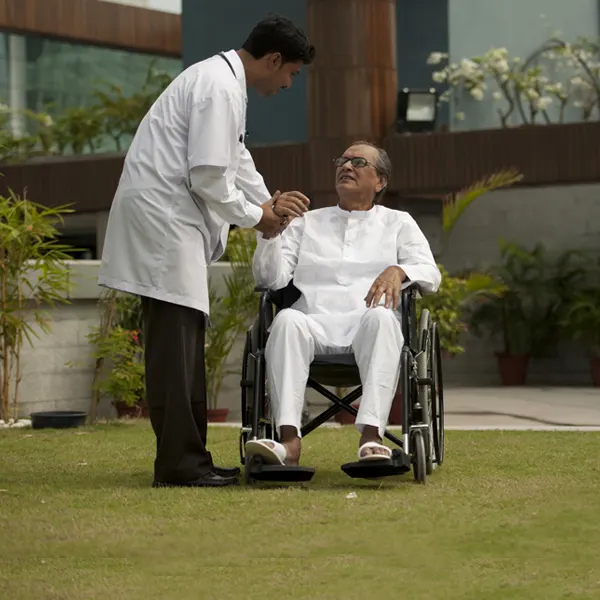
- Time outdoors and something purposeful to do, on a double-gated campus with security and CCTV round the clock. Tell us at the assessment if your parent tends to wander.
- Evening confusion
- Daylight and activity earlier in the day, then a calm evening and a settled bedtime.
- Agitation
- Checking for pain, hunger, discomfort or signs of illness, a quiet word, familiar music and a change of scene.
- Repeated questions
- Patient answers, gentle reminders and reassurance about the worry behind the question.
- Poor sleep
- An active day, fewer long naps and the same bedtime routine each night.
- Refusing help
- Trying again a little later, offering choices, and always protecting dignity and modesty.
A day here
A gentle day at Jagriti Dham
This is how the day usually runs. Nothing on it is compulsory, and your parent joins in at their own pace.
- Early morning
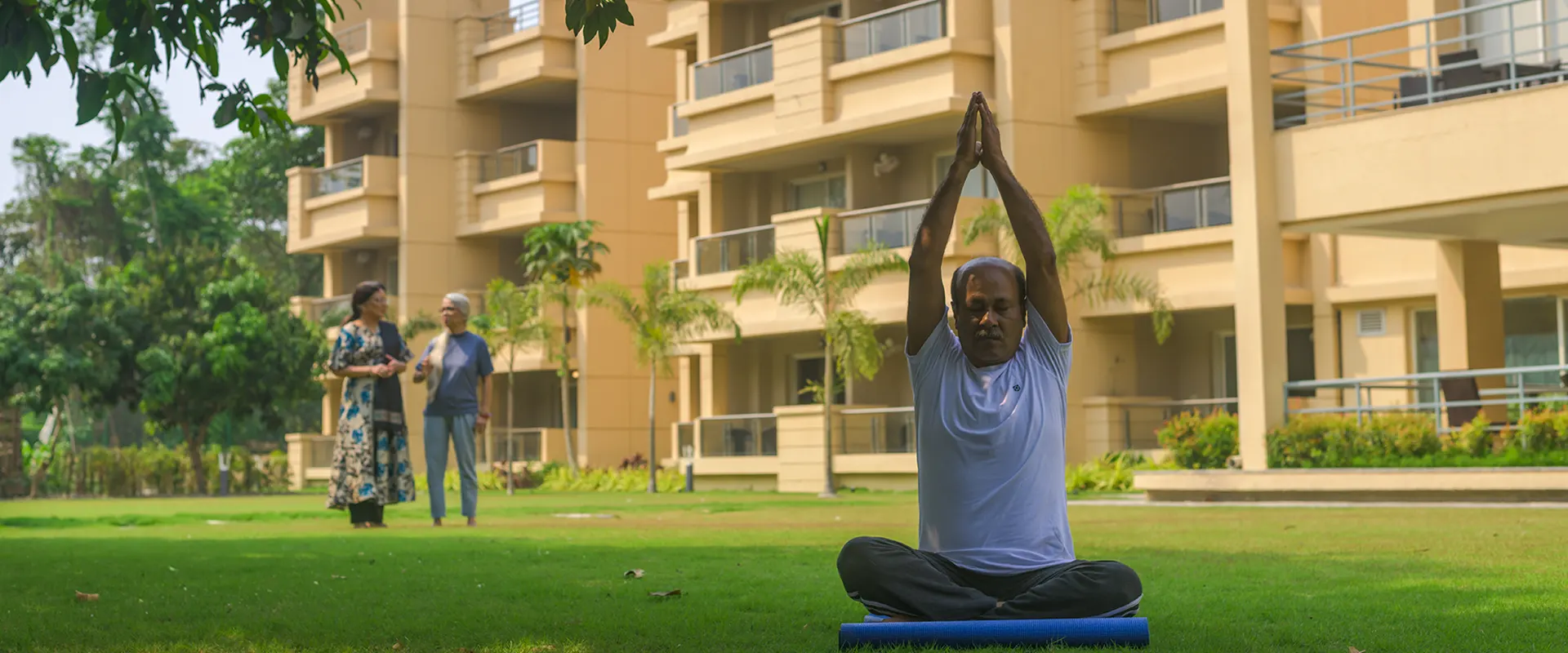
Waking at their own pace, the morning aarti at the Krishna Temple for those who wish, and a walk or gentle yoga on the lawns.
- Breakfast
Help with bathing and dressing where it is needed, then a freshly cooked breakfast.
- Late morning
Something to do: music, games, reading, a little time in the garden, or conversation over tea.
- Lunch and rest
A freshly cooked vegetarian lunch, then a quiet rest.
- Late afternoon
Tea and evening snacks, games, and time with visitors.
- Evening
Evening prayers for those who wish, a film in the movie room, dinner, and the same bedtime routine each night.
Festivals, from Durga Puja to Diwali, are celebrated together through the year. See a day at Jagriti Dham
The place
A calm, safe place to live
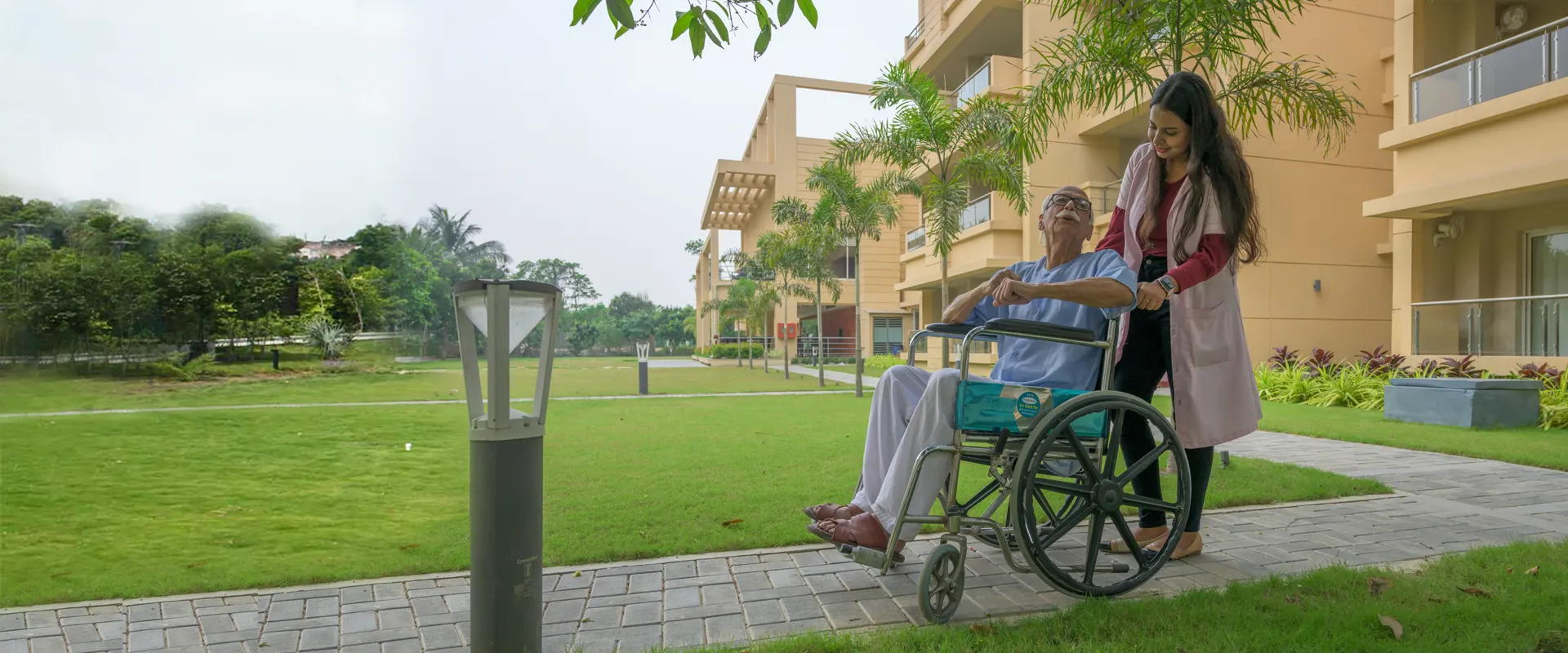
Green, quiet and wheelchair-accessible.
-
A room of their own
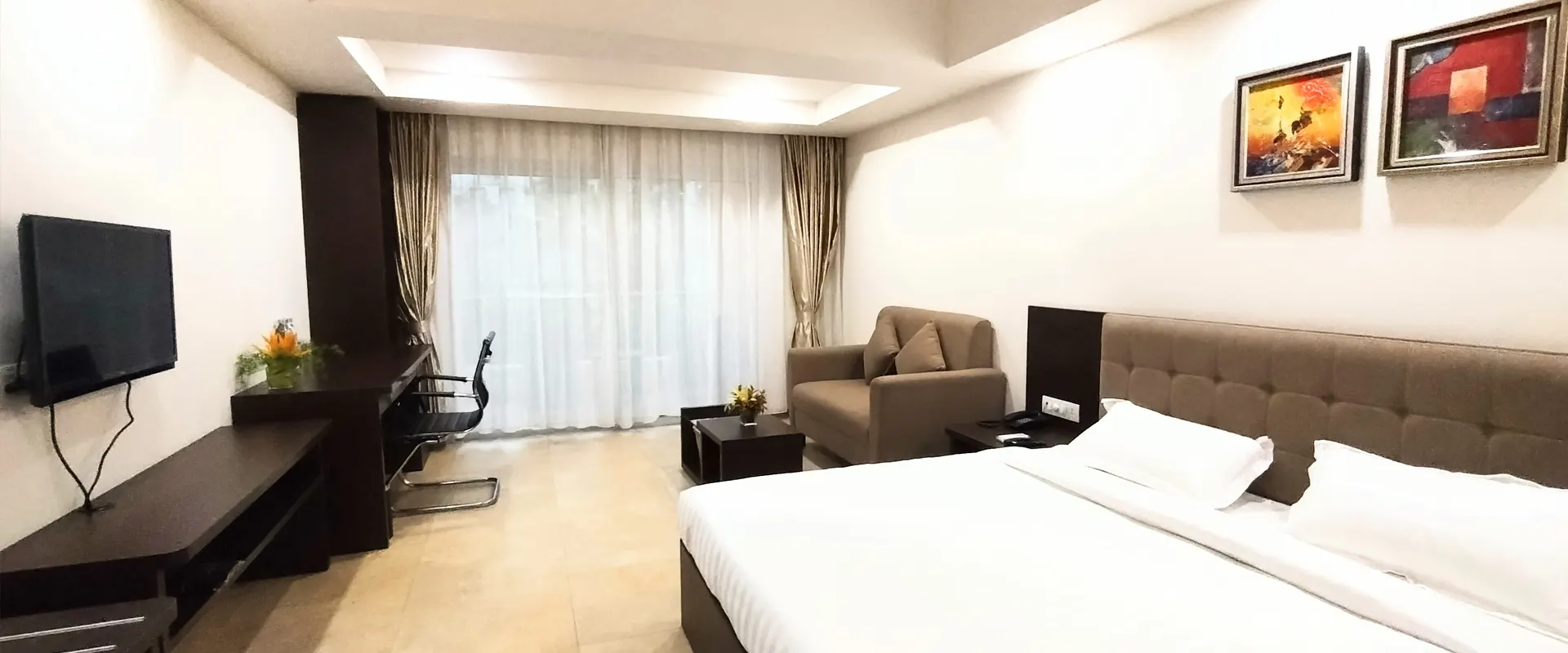
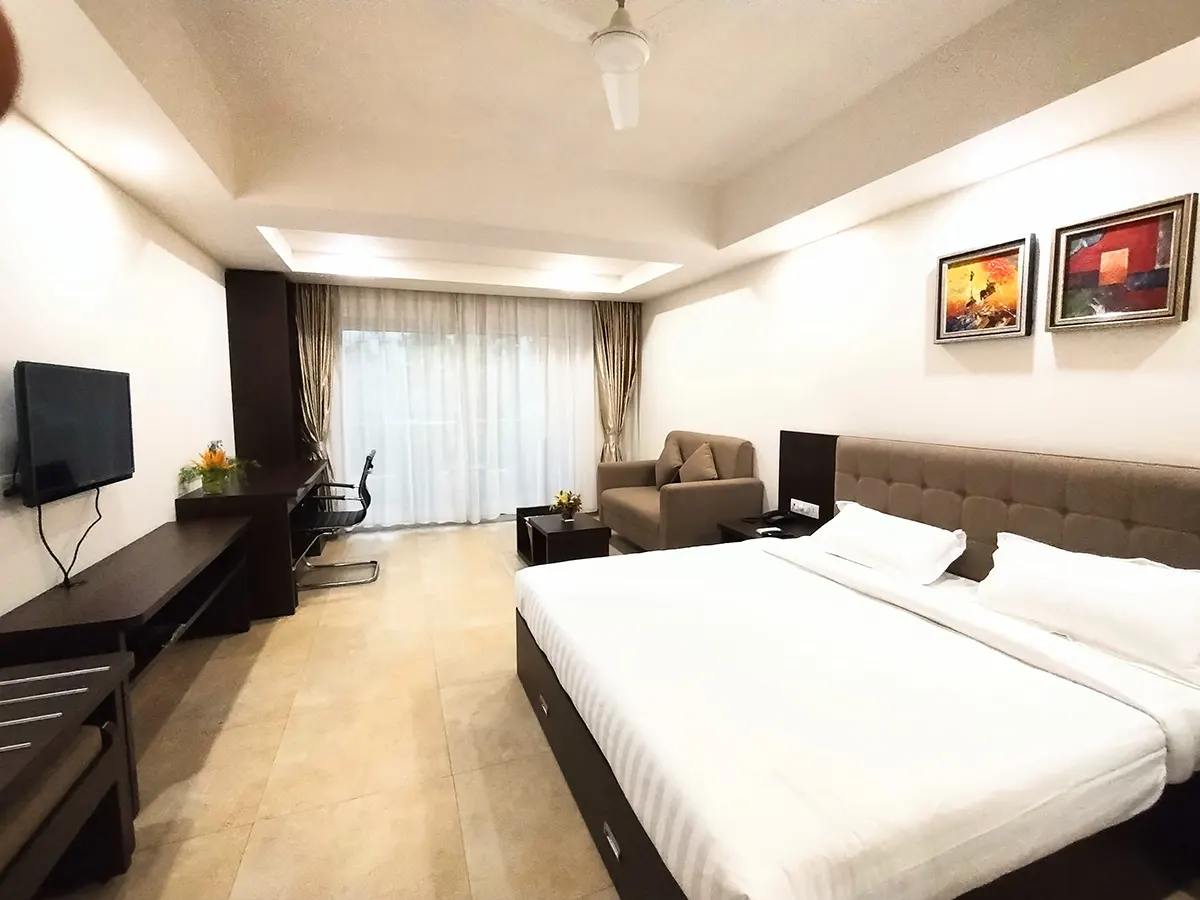
A private, air-conditioned room with an attached bathroom and a balcony. A few familiar things from home help it feel like theirs.
-
Help within reach
An emergency calling switch in every room, and devices the doctors recommend to help prevent accidents.
-
Room to walk
Lawns, green walkways and a temple, on a double-gated campus with security and CCTV round the clock.
-
Easy to get around
A wheelchair-accessible campus, and some rooms designed for elders with a disability.
-
Peace and quiet
A green setting near Joka, away from the city’s noise, yet 30 minutes from IIM Calcutta.
-
Company, gently
Shared meals, a library, games, music and festivals, joined at whatever pace suits.
Alzheimer’s disease
Alzheimer’s care, stage by stage
Alzheimer’s is the most common cause of dementia. It usually changes slowly, over years, and the care changes with it.
In Alzheimer’s disease, abnormal proteins build up in the brain, and brain cells are slowly lost. The changes often begin years before anyone notices them. The illness usually moves through three broad stages, though every person’s path is different.
-
Early stage
- What changes
- Mostly independent, but forgetting recent things, needing reminders and finding complex tasks harder.
- How we help
- A routine that keeps them active and involved, reminders for medicines and appointments, and time to plan ahead together as a family.
-
Middle stage
- What changes
- More help is needed with daily life. Wandering, restless evenings, changes in mood and broken sleep may appear.
- How we help
- Help with bathing, dressing and meals from an attendant, available at all times and charged according to the care plan, a structured day, and calm responses to changes in behaviour.
-
Late stage
- What changes
- Full help is needed with personal care. Walking, eating and swallowing can become difficult.
- How we help
- Help with bathing, dressing, moving about and meals, given with dignity, for as long as we can care for your parent safely; the assessment decides. Jagriti Dham does not provide palliative care, the specialist care for comfort when an illness is very advanced. If your parent’s needs grow beyond what we can offer, we will tell you honestly and help you plan the next step.
Getting a diagnosis
A diagnosis usually comes from a neurologist, a psychiatrist or a memory clinic, after tests of memory and thinking, blood tests and a brain scan. Some causes of memory loss, such as thyroid problems or a lack of vitamin B12, can be treated, which is why proper tests matter.
About the new Alzheimer’s medicines
New medicines for early Alzheimer’s disease have been approved in India. They are given through a drip at a hospital or clinic, under a neurologist, and only to carefully chosen people in the early stage, after special tests. They can cause swelling or small bleeds in the brain, so regular brain scans are needed while they are given. They are not a cure: at best they slow the decline a little, and they are not suitable for everyone. Your neurologist decides.
Older medicines may ease symptoms for a while in some people. Whatever your parent’s doctor prescribes is given as prescribed, and any change we notice is reported.
The team
The people who care for your parent
Care here is shared between trained people, round the clock.

- Caregivers
- Trained caregiving staff on site day and night, and attendants trained to support elders with dementia or Parkinson’s disease.
- Nurses
- Nurses supervise the care and manage medicines, and general health is checked every day.
- Doctors
- A weekly check-up by the visiting doctor, with specialists on call.
- Physiotherapy
- A physiotherapist on call at an additional charge, an in-house gym and green walkways.
- Specialised dementia care
- Arranged through our care partners when it is needed, at an additional cost.
- Emergencies
- An ambulance on call, partner hospitals, and the nearest hospital, Bharat Sevashram, within 20 minutes of the campus.
For the family
You stay part of their life
Moving in changes where your parent lives, not who loves them.
-
Visit any day
Family can visit at any time; we ask only that you tell us you are coming. Parking is free, and guest rooms can be booked when available, at a charge.
-
Part of the plan
The care plan is agreed with you, and updated as your parent’s needs change.
-
Close, even from abroad
Children in another city or abroad can stay in touch through phone and video calls.
-
Try a short stay first
A short stay, from one night to a few months, lets you and your parent see how it feels. A new place can be unsettling at first, so do not judge by one night alone. Read about respite care
Looking after someone with dementia is hard, and it is all right to need help. Caring for yourself is part of caring for them.
Getting started
How care begins
Six unhurried steps, taken together.
Call or WhatsApp us
Tell us about your mother or father, and what worries you most.
Visit the campus
See the rooms, the gardens and the people, at a time that suits you.
The assessment
Our doctors review your parent’s medical reports and examinations, and we meet your parent to understand their needs.
A care plan, agreed with you
The care is planned around the person, with your parent involved as far as they are able, and with the family’s consent.
Settling in
Arrival day is kept calm and unhurried, with familiar things from home close by.
Updates as needs change
The plan is updated when your parent’s needs change, and any change in care is agreed with you.
What decides the cost
The cost depends on the room and on the care your parent needs, which the assessment decides. An attendant’s help with daily tasks, physiotherapy, specialised dementia care arranged through our care partners and concierge services are charged separately, and medicines and hospital treatment are not included. Call us for a clear answer for your family.
Questions
Questions families ask
Is dementia the same as Alzheimer’s?
No. Dementia is the name for a group of changes in memory, thinking and everyday life. Alzheimer’s disease is its most common cause, and there are others, such as vascular dementia.
Is memory loss a normal part of growing old?
Some slowing is common with age, but dementia is not a normal part of ageing. If memory loss is affecting daily life, please see a doctor.
How do we know it is time for residential care?
When safety, the nights, changes in behaviour or the strain on the family can no longer be managed well at home. Some families also choose care earlier, while their parent can settle in more easily.
Do you care for elders with dementia or Alzheimer’s?
Often, yes; the assessment decides. Our attendants are trained to support elders with dementia, and specialised care is arranged through our care partners at an additional cost. We will tell you honestly whether we can care for your parent well. We welcome elders of 55 and above, but cannot take anyone with an infectious disease that can spread to others.
How do you handle wandering and restless evenings?
With a steady routine, time outdoors and something to do during the day, and calm evenings, on a double-gated campus with security and CCTV round the clock. Please tell us at the assessment if your parent tends to wander or is restless at night, so that we can tell you honestly whether we can keep them safe.
Will my parent’s medicines be managed?
Yes. Medicines are managed by the care team and given as the treating doctor prescribes.
Who looks after my parent’s health?
Nurses supervise the care, and general health is checked every day. The visiting doctor holds a check-up every week, specialists are on call, and an ambulance is on call for emergencies.
What happens in a medical emergency?
Every room has an emergency call switch, and staff on site answer it. An ambulance is on call, and if hospital care is needed we arrange the move to one of our partner hospitals. The nearest hospital, Bharat Sevashram, is within 20 minutes of the campus. Hospital treatment is charged by the hospital and is not part of the stay.
Can we visit, and can we stay over?
Yes. Family can visit at any time; just tell us you are coming. Guest rooms can be booked at a charge when one is free, and the Ibiza resort is a few steps away.
We live in another city or abroad. Can we arrange this from there?
Yes. Begin by phone, WhatsApp or e-mail (contact@jagritidham.com), and send your parent’s medical reports early: our doctors review them before every stay. If you can, time the move within a visit home, so that you are there for the first days. After that, phone and video calls keep you in touch, and you can visit whenever you are in Kolkata.
I look after my husband or wife. Can we stay together?
Yes. A couple can stay together in a room for two. Every stay begins with an assessment, and the care each of you needs is planned with you.
Is the food suitable?
Four freshly cooked vegetarian meals are served each day, and a diet schedule can be followed when the doctor advises one. The kitchen is vegetarian; fish or meat may be brought in and eaten in your parent’s own room.
Do you care for advanced dementia?
It depends on the care your parent needs; the assessment decides, and we will tell you honestly before you decide. Jagriti Dham does not provide palliative care. If your parent’s needs grow beyond what we can offer, we will tell you and help you plan the next step.
Can my parent try a short stay first?
Yes. A short stay can be from one night to a few months, and it is a gentle way to begin. A new place can be unsettling at first for someone living with dementia, so do not judge by one night alone, and bring a few familiar things from home.
Are the new Alzheimer’s medicines given at Jagriti Dham?
No. They are given through a drip at a hospital or clinic, under a neurologist, not at Jagriti Dham. You can take your parent to these appointments; just tell the resident manager beforehand.
Is Alzheimer’s passed down in families?
Most Alzheimer’s disease is not passed down directly. Having a parent with it raises the risk a little, and a few rare forms that begin early in life do run in families. If you are worried, talk to a doctor.
Can a healthy lifestyle lower the risk of dementia?
It can lower the risk, though nothing can promise to prevent dementia in one particular person. Staying active and in touch with people, keeping the mind busy, having hearing and eyesight problems treated, not smoking, and keeping blood pressure and diabetes under control all help.
What does dementia care cost?
It depends on the room and on the care your parent needs, which the assessment decides. An attendant’s help with daily tasks, physiotherapy, specialised dementia care through our care partners and concierge services cost extra, and medicines and hospital treatment are not included. Call 88200 22022 and we will explain it for your family.
This page gives general information, not medical advice. The instructions of your parent’s own doctor always come first.
Talk to us about your mother or father
Tell us what is happening at home. We will listen, answer your questions, and show you around when you are ready.
Coming home from a hospital stay? Read about out-of-hospital care